
Let’s talk about the word “plasma.” Seriously, think about it. It’s one of...
2025-10-06 28 Plasma
Of all the words we use to describe the future, "plasma" might just be the most profound. For most of us, it conjures images of a hospital bag, the golden liquid component of blood plasma that saves lives after a traumatic accident or helps patients with immune deficiencies live normal lives. It’s the stuff of biology, of humanity, of the very real and immediate present.
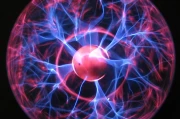
But there’s another plasma. The plasma of physics. The fourth state of matter, the superheated, electrically charged gas that powers the sun and every star in the universe. It’s the fuel for nuclear fusion, the long-held dream of clean, limitless energy. This plasma is the stuff of ambition, of science fiction, of a distant, shimmering future.
For decades, these two worlds have felt galaxies apart. One is a messy, human-centric system of plasma donation, public awareness campaigns, and complex ethical questions. The other is a world of colossal machines, magnetic fields, and mind-bending physics. But a recent breakthrough from Princeton has slammed these two worlds together, and it’s all thanks to an AI that can see the invisible.
Imagine you’re trying to contain a miniature star inside a magnetic bottle. This is, in essence, what a tokamak fusion reactor does. The problem is, this star—this plasma—is notoriously unstable. It writhes and flares with instabilities that can extinguish the reaction or even damage the multi-billion-dollar machine. To control it, scientists pepper the reactor with sensors, or "diagnostics," trying to get a clear picture of what’s happening inside.
But here’s the catch: the most important part of the plasma to watch is the edge, known as the "pedestal," and it’s also the hardest to measure. Our sensors are like trying to listen to a symphony with earmuffs on; they capture the loud booms but miss the subtle, crucial notes that predict when something’s about to go wrong.
This is where the Princeton team’s new AI, called Diag2Diag, comes in. And when I first read their paper in Nature Communications, I honestly just sat back in my chair, speechless. What they’ve built is less an AI and more of a sensory prosthesis for the entire field of fusion research. It’s like a cochlear implant for a fusion reactor. The physical sensors can pick up the raw vibrations, but the AI translates those garbled signals into a complete, high-fidelity picture of what the plasma is actually doing from moment to moment, filling in the details that were completely invisible to us before.
The AI was trained on data from existing sensors and learned the deep physical relationships between them, allowing it to generate a "synthetic" view from a diagnostic that isn't there, or one that isn't fast enough to capture the action. It can see the formation of "magnetic islands"—tiny whirlpools in the magnetic field that can tame the plasma's violent outbursts—with a clarity we've never had. This is the kind of breakthrough that reminds me why I got into this field in the first place, because it’s not just an incremental improvement, it’s a paradigm shift in perception itself.
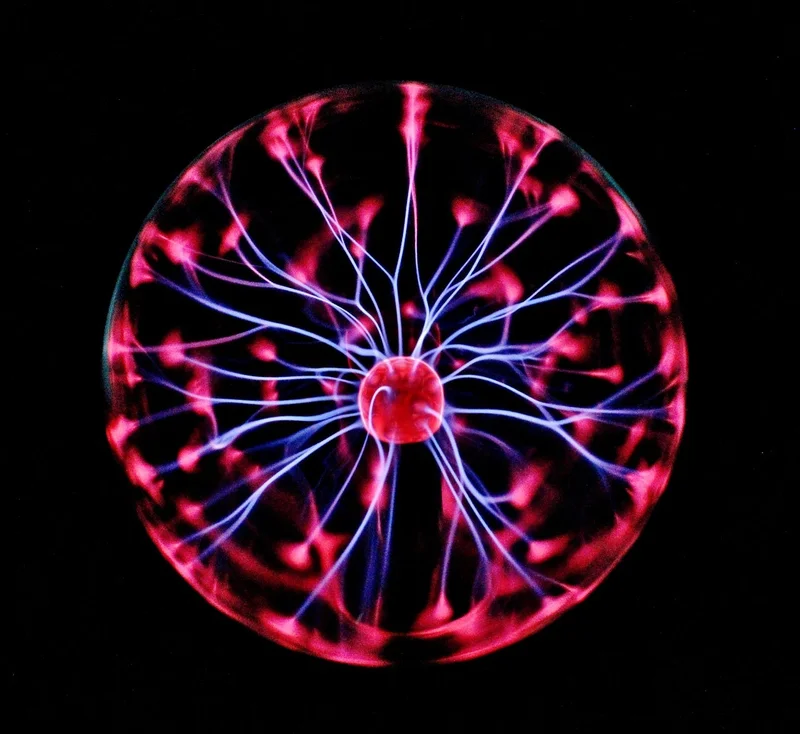
What does this really mean? It means we’re one giant leap closer to fusion power that runs 24/7, reliably, without the constant threat of a plasma disruption shutting everything down. It means future reactors can be simpler, cheaper, and more compact, because the AI can do the heavy lifting that once required a dozen bulky, expensive sensors. This is the key that could finally unlock fusion as a practical energy source, and it’s a key that was forged not from metal, but from code.
But while we’re teaching an AI to interpret the whispers of a man-made star, we’re still grappling with the far more tangible plasma flowing through our own veins. The contrast is jarring. On one hand, we have this elegant, computational solution to a cosmic-scale problem. On the other, we have a very human system filled with gaps in understanding, logistical hurdles, and thorny ethics.
New survey reveals Americans' perception of the growing need for plasma-derived medicines, commissioned by the Plasma Protein Therapeutics Association (PPTA), lays this out perfectly. A solid 72% of Americans agree that plasma-derived medicines can save lives. We know it’s important. Yet eight out of ten people have never donated. Why? Nearly half say they simply don’t know enough about the process. There’s a fundamental disconnect between acknowledging a need and feeling empowered to fill it. Is it a failure of education, or is there a deeper hesitation at play?
That hesitation might be rooted in the growing complexity of the system itself. Look at the recent story out of Canada, where longtime volunteer donors were shocked to learn that byproducts from their donations were being used by a multinational pharmaceutical company, Grifols, to manufacture products for sale on the international market. The intent of the donor—a purely altruistic gift—collided with the reality of a global, for-profit supply chain. It doesn’t pass the "smell test," as one advocate put it. How do we maintain trust in a system where the line between altruism and commerce becomes so blurred?
And the stakes couldn't be higher. We aren't talking about abstract energy grids of the future; we're talking about medical devices used right now. Just recently, 3M was the subject of a serious Blood and Plasma Warming Device Correction: 3M Company Issues Correction for Ranger Blood/Fluid Warming System. The machines couldn't warm fluids properly at the high flow rates they were advertised for, creating a risk of hypothermia for patients. It’s a stark reminder that in the world of medical plasma, precision is a matter of life and death.
So here we stand, at a fascinating crossroads between two plasmas. With one, we are using artificial intelligence to solve one of the most complex physics challenges ever undertaken. We are building a future of clean, abundant energy. With the other, we are facing fundamentally human challenges: building trust, educating the public, and ensuring the systems we create to save lives are as transparent and robust as the people they serve.
The beautiful irony is that the same kind of thinking that created the Diag2Diag AI—seeing patterns, optimizing systems, and finding elegant solutions—is exactly what we need to apply to the human side of the equation. Perhaps the greatest breakthrough isn't just in mastering the plasma in stars, but in using that same ingenuity to perfect the systems that handle the plasma within us. One gives us the power to build a new world; the other ensures we are worthy of living in it.
Tags: Plasma
Related Articles
Let’s talk about the word “plasma.” Seriously, think about it. It’s one of...
2025-10-06 28 Plasma
Generated Title: Why the 'Death' of a Fusion Reactor Is the Most Exciting N...
2025-10-04 31 Plasma
I saw the word three times in one day. At first, I didn't think anything of...
2025-09-29 31 Plasma

The launch of the Plasma blockchain’s native token, XPL, on Thursday was an...
2025-09-28 31 Plasma
Words have a life cycle. They’re born in a lab or a boardroom, they become...
2025-09-27 107 Plasma