
Timor-Leste's ASEAN Accession: A Sober Look at the Economic Realities
Digital Lifelines for ASEAN's Newest Member
After a 14-year application process—or 49 years, if you start the clock with President José Ramos-Horta’s first overtures—Timor-Leste has officially joined the Association of Southeast Asian Nations (ASEAN). The diplomatic victory is monumental. Outside the presidential palace in Dili, an empty flagpole that stood for years as a quiet symbol of aspiration now flies the ASEAN ensign. This is the culmination of a long, painful journey for Asia’s youngest nation, a country forged in a brutal independence struggle.
But the pomp and ceremony in Kuala Lumpur obscure a much harsher, more fundamental reality. Joining ASEAN doesn’t magically fix a national balance sheet. Timor-Leste enters the bloc as its poorest member by a staggering margin, contributing just 0.1% of the regional GDP. Its economy is dangerously dependent on oil reserves that are rapidly depleting. Issues like high unemployment and child malnutrition aren’t just statistical footnotes; they are the dominant economic narrative.
The flurry of activity in the days following the accession tells the real story. It’s not a story about diplomatic recognition, but about a desperate, calculated scramble to build the physical infrastructure of a modern state from the ground up. The handshakes and photo ops are window dressing for the urgent work of laying pipes—not for oil, but for data.
The Foundation is Fiber, Not Flags
Just days after its formal welcome into ASEAN, Timor-Leste’s state-owned network operator, Cabos de Timor-Leste (CTL), signed a Memorandum of Understanding with Telin, the international arm of Indonesia’s state telecom giant. The agreement was announced under the headline Cabos de Timor-Leste and Telin to collaborate on telecoms projects. This wasn’t a minor courtesy call. The MoU lays the framework for collaboration on a potential bilateral submarine cable system, knowledge sharing, and cybersecurity development. This followed another MoU signed just a week prior with the Malaysian government for cooperation on telecom infrastructure.
Let’s be clear about what this means. A submarine fiber optic cable is not a luxury. It is the foundational layer of a 21st-century economy. It’s the physical conduit for everything from international banking transactions and cloud computing to basic e-commerce and remote education. For a nation like Timor-Leste, it’s the non-negotiable prerequisite for attracting foreign investment, diversifying its economy away from oil, and participating in the regional digital ecosystem it just formally joined. An invitation to ASEAN is an invitation to a complex economic game. Showing up without robust digital connectivity is like arriving at a regatta without a boat.
The strategy appears to be one of aggressive diversification. The country’s first international subsea system, the 607-km Timor-Leste South Submarine Cable (TLSSC), connects it south to Australia's North-West Cable System. But the new agreements with Indonesia and Malaysia signal a deliberate pivot north, embedding the nation within the ASEAN digital corridor. Furthermore, the country is set to get landings from two more major systems by 2027: the transpacific Asia Connect Cable (ACC-1) and the Hawaiki Nui 1 system. This isn’t just about getting online; it’s about building redundancy and avoiding dependence on a single geographic or political partner.
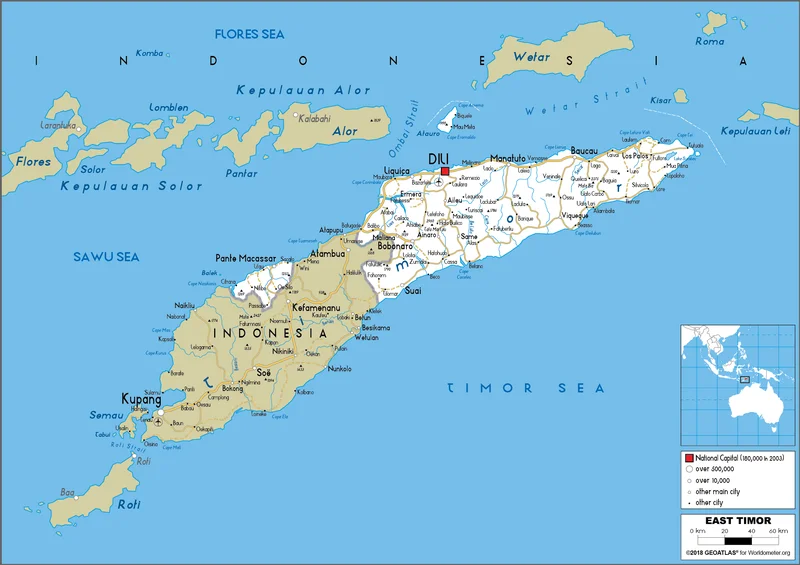
I’ve analyzed dozens of national development plans, and the velocity of these announcements immediately following the ASEAN accession is striking. This isn't a series of coincidences. It suggests a sequenced, pre-planned diplomatic and economic strategy that was contingent on membership. The accession wasn't the finish line; it was the starting gun for the infrastructure build-out. The core question, however, remains one of execution. MoUs are statements of intent, not legally binding contracts for capital expenditure. How much of this is concrete financial commitment versus astute diplomatic signaling to other potential investors? The data on that is, for now, unavailable.
The numbers here are stark. Timor-Leste’s accession was delayed for over a decade partly because members like Singapore questioned its state capacity—a polite way of pointing out its lack of money, personnel, and institutional readiness. President Ramos-Horta himself now admits the delay was probably the right call, as it "forced us to increase the pace of our efforts to develop resources, infrastructure and so on." The recent agreements are the tangible output of that forced development. The total capital required for these projects will be substantial (specific figures are not yet public), and for a nation with a GDP of around $2 billion—to be more exact, it was projected at $2.03 billion for 2023—the financing will be a monumental challenge.
A Seat at the Table, But Still Building the Chair
Timor-Leste’s entry into ASEAN is a fascinating outlier. It brings a vocal proponent of liberal democracy and press freedom into a bloc that includes one-party states, a military junta, and an absolute monarchy. President Ramos-Horta and Prime Minister Xanana Gusmão have been openly critical of Myanmar’s military regime, a stark contrast to ASEAN’s traditional, and often ineffective, policy of non-interference. This gives the country a unique political voice, but a voice is only as effective as the economic and strategic weight behind it.
That weight has yet to be built. The appointment of Ambassador Natércia Cipriano Coelho da Silva as the country's first Permanent Representative to ASEAN is a historic and necessary step. The official notice from the bloc was titled Permanent Representative of the Democratic Republic of Timor-Leste to ASEAN Presents Letter of Credence to the Secretary-General of ASEAN. It formalizes Timor-Leste's seat at the table. But the work of her office will be less about high-minded political discourse and more about the grueling, technical process of integrating into ASEAN's economic frameworks, trade agreements, and regulatory standards.
This is where the digital infrastructure plan becomes so critical. Access to preferential trade agreements is meaningless if your country's businesses can't reliably connect to regional supply chain platforms. Attracting tourism is harder when digital booking and payment systems are unreliable. The collaboration with Telin for submarine cable management and cybersecurity isn't just a tech project; it's a national security and economic sovereignty initiative. It’s about building the chair, legs and all, that the ambassador will sit on.
As Ramos-Horta bluntly stated, the day after the celebration hangover, the real work begins. He is acutely aware that the very nations that once questioned Timor-Leste’s readiness will be watching closely. The nation is now playing in a league where its neighbors have a decades-long head start. The political victory is secured. The economic battle has just begun.
The Real Work Starts at the Physical Layer
The diplomatic champagne has been popped, and the flag has been raised. It’s a genuinely historic moment for a nation that has endured so much. But my analysis suggests we should view this not as a graduation, but as an enrollment. Timor-Leste has finally been admitted to the school of regional integration, only to find itself in remedial classes for basic infrastructure. The MoUs with Indonesia and Malaysia are the country’s leadership acknowledging a simple, brutal truth: in the 21st century, political legitimacy flows through fiber optic cables. Everything else is just noise.
Tags: timor leste
The New Era of Mortgage Rates: Why They're So Unpredictable and What It Means for You
Next PostThe AI Data Center Boom: The $90M Promise and the Looming Power Question
Related Articles