
ARM Mortgages: The 'Flexibility' No One Really Asked For, Except the Banks...
2025-11-24 16 current mortgage rates
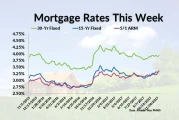
It’s a scene playing out in a million homes right now. You’re at the kitchen table, the glow of a laptop screen illuminating your face, a cup of coffee growing cold beside you. On the screen is a graph that looks more like an EKG of a patient in cardiac arrest than a stable financial instrument. This, my friends, is the modern mortgage rate. It zigs, it zags, it defies logic, and it’s causing a nationwide headache.
We’re told a simple story: when the Federal Reserve cuts its benchmark rate, borrowing should get cheaper. It’s supposed to be a fundamental law of financial physics. Yet, we just watched the Fed cut rates, and what happened? Mortgage rates, in a stunning act of defiance, shot up. It’s enough to make you want to throw your laptop out the window. Headlines scream "Yet Again, Mortgage Rates Surge Higher After Fed Rate Cut," and the collective groan is almost audible.
But what if we’re looking at this all wrong? What if this isn’t a broken system, but an incredibly complex one sending us a new kind of signal? When I first saw the data from the last few months, I honestly just sat back in my chair, speechless. Not because it was illogical, but because it was a perfect, beautiful example of a complex adaptive system at work. The researcher in me was fascinated; the homeowner in me understood the frustration. The paradox isn't a glitch. It's the new operating system.
Let’s get one thing straight: the idea that the Fed directly controls mortgage rates is a fallacy we need to discard. It’s like thinking the captain of a cruise ship controls the weather. The captain can react to the weather, sure, but they don’t command the wind and the waves. The Fed controls one specific short-term rate, but mortgage rates live in a much bigger, wilder ocean—the global bond market, which is driven by a storm of future expectations, inflation fears, and global economic sentiment.
So, why did rates jump after the cut? Because the market isn't reacting to the cut itself; it's reacting to the story the Fed tells along with it. In this case, Fed Chair Powell’s commentary suggested future cuts weren't a sure thing. The market, which had already priced in a more aggressive series of cuts, had a panic attack. It’s a classic case of expectation mismatch. This is the new reality—we're trading on narratives and future probabilities, not just present-day actions.
This is where we have to fundamentally shift our thinking. We’re trying to navigate a dynamic, 21st-century information ecosystem using a static, 20th-century road map. It’s like using a paper map of London from 1980 to find a pop-up coffee shop that exists only on Instagram. The map isn’t just outdated; it’s the wrong tool entirely. So, what’s the right tool? How do you make one of the biggest financial decisions of your life when the ground is constantly shifting beneath your feet?
The answer, I believe, lies in treating this not as a financial problem, but as an information processing problem.

You can’t predict the market. Let’s just accept that and move on. What you can do is build a personal decision-making framework—your own personal algorithm—that’s robust enough to handle the volatility. This isn’t about timing the absolute bottom of the market to the hundredth of a percentage point. It’s about finding a number that works for you and building in safeguards.
Right now, rates are hovering around a three-year low of 6.13%. Is it the 3% we saw a few years ago? No. But obsessing over that is like mourning the price of gasoline in 1999. It’s a sunk cost, a memory. The real question is: Can you afford your life with a rate in this ballpark? If the answer is yes, then locking in that rate removes the single biggest variable from your house-hunting equation. It’s a staggering relief—it means you can finally budget with precision and stop the endless, anxiety-inducing cycle of checking rates every single morning.
This is where we need to get smarter about the tools at our disposal. Ask your lender about a "float-down option." Let me do a quick clarifying self-correction here: a float-down is essentially an insurance policy on your locked rate. In simpler terms, if rates happen to drop again before you close on your home, this feature lets you grab that lower rate. It’s a beautiful piece of financial engineering that creates a win-win scenario for you. Your rate can only get better, not worse. Why isn't this a standard feature on every mortgage offer in a volatile market like this one?
Building your algorithm also means looking beyond the interest rate. It's about your personal timeline. Locking in a rate now could mean getting ahead of the absolute chaos of the spring buying season, where a quarter-point drop in rates could unleash a torrent of pent-up demand and trigger bidding wars. You might pay a slightly higher rate but get a much better price on the house itself. It's a multi-variable equation, and we too often focus on just one number.
There’s a moment of ethical consideration here, too. The sheer complexity of this environment places an incredible amount of stress on families just trying to find a place to call home. Lenders and financial advisors have a profound responsibility to be educators first and salespeople second, helping people build these robust frameworks instead of just pushing the "product of the day."
We're living through a paradigm shift. The mortgage market is no longer a slow-moving, predictable beast. It's a high-frequency data stream, and trying to "time it" is a fool's errand. The winning strategy isn't about having a crystal ball; it's about having a better process.
Forget the noise. Forget the daily headlines. Build your own algorithm based on what you can control: your budget, your timeline, and your risk tolerance. Use modern tools like float-down options to hedge your bets. See the current rate not as a historical failure but as a present opportunity to seize certainty in a world that offers very little of it. The future of homeownership won't belong to the market timers. It will belong to the clear-headed, the well-prepared, and those who know how to find the signal in the noise.
Tags: current mortgage rates
Related Articles
ARM Mortgages: The 'Flexibility' No One Really Asked For, Except the Banks...
2025-11-24 16 current mortgage rates