
Fintech Founder Ozan Özerk: Analyzing His Global Expansion and Core Fintech Thesis
At a recent summit in Vilnius, Dr. Ozan Özerk, a former emergency room physician turned serial fintech founder, delivered a diagnosis of the global financial system. His core message, as detailed in Dr Ozan Özerk Highlights Fintech Shifts and Strategic Priorities at AmCham Lithuania Summit, was unambiguous: the industry isn’t just evolving; it’s in a state of high-velocity acceleration. Standing before an audience of investors and policymakers, he framed the current landscape not as a marathon, but as a qualifying lap where hesitation is fatal. "Do nothing," he warned, "and you donate advantage to your fastest competitor."
This is the kind of galvanizing rhetoric that defines the modern tech conference circuit. It’s a call for speed, for aggressive adoption, for a fundamental rewiring of corporate DNA. Yet, parsing the data points Özerk presented alongside his broader commentary reveals a far more complex and contradictory prescription. He is, in effect, advising the financial world to simultaneously sprint and perform delicate surgery on itself. My analysis suggests this isn't just a clever turn of phrase; it's a precise articulation of the brutal strategic paradox facing every financial institution today.
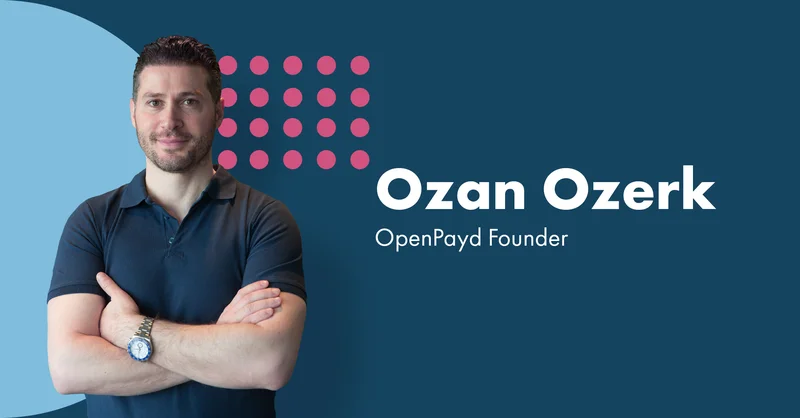
Özerk’s credentials lend a certain clinical weight to his pronouncements. After years in medicine, he co-founded a social network in Norway that sold for over 100 million krone before pivoting to finance. His portfolio now includes a Banking as a Service provider (OpenPayd), a European Central Bank-licensed institution in Lithuania (EMBank), and a crypto payment platform (Bitpace), among others. This isn't a theorist; it's a practitioner who has built the very systems he's dissecting. And from his perspective, the data signaling an irreversible shift is overwhelming.
The Mandate for Acceleration
Özerk’s argument for speed is grounded in concrete regulatory and technological shifts happening in parallel across Europe and the United States. In the EU, instant payments are no longer a premium feature but a legal mandate. By late 2025, all euro transactions must clear in ten seconds or less, a non-negotiable deadline that effectively obsoletes legacy batch-processing systems. This is compounded by the upcoming Financial Data Access Regulation, which will force data sharing well beyond simple bank accounts, and the European Digital Identity Wallet, designed to standardize cross-border verification.
Across the Atlantic, the U.S. is finally closing the gap. The GENIUS Act has created a federal framework for payment stablecoins, and major networks like Visa and Stripe are already settling transactions in digital currencies. Real-time payment systems like FedNow and RTP are scaling up, with transaction limits increasing to accommodate large corporate transfers.
These aren't incremental improvements. They represent a fundamental change in the plumbing of global finance. For Özerk, the takeaway is a set of clear, urgent marching orders for the next 12 months: "switch on instant pay," adopt digital IDs, pilot data-sharing, and re-tool compliance for a world of instantaneous transactions. The message is clear: the starting gun has fired, and those still tying their laces will be left behind. The inertia of large organizations, once a source of stability, has become their primary liability.
The Paradox of Disciplined Revolution
Just as the audience was likely processing this mandate for radical, immediate change, Özerk introduced a critical constraint. "Build for tomorrow," he cautioned, "but not at the expense of today." This is where his medical background becomes most apparent, echoing the Hippocratic oath to "first, do no harm," a principle he has explored in Dr Ozan Ozerk on Lessons from Medicine That Can Reshape Modern Finance. He pointed to the colossal capital inflows into artificial intelligence—over $250 billion in global private investment last year, supplemented by the EU’s €200 billion InvestAI initiative—as evidence of a structural revolution. Yet he simultaneously warned against the seductive allure of innovation for its own sake.
This is the central dilemma. How does an institution "industrialise compliance for instant rails" while ensuring its current, revenue-generating operations remain perfectly stable? It’s analogous to a surgeon attempting to perform a heart transplant on a patient who is simultaneously running a marathon. The procedure is necessary for long-term survival, but the immediate operational risk is astronomical.
I've looked at hundreds of corporate turnaround strategies and tech implementation roadmaps, and this is the part of the narrative that I find genuinely puzzling. The rhetoric of "disruption" and "revolution" is almost always decoupled from the grim realities of operational stability. Özerk, however, seems to be one of the few founders publicly acknowledging that you can't just burn the old ship while you're still building the new one. His own company, OpenPayd, manages a significant yearly payment volume—it’s now over $100 billion, or to be more exact, $108 billion—a scale at which "move fast and break things" is not a viable strategy.
This dual mandate creates an almost impossible tension. The market demands revolutionary speed, but regulators and customers demand absolute stability. You must adopt AI-driven workflows, but any algorithmic failure could trigger catastrophic compliance breaches. You must integrate with decentralized blockchain networks for FX settlement—a concept Özerk champions for its efficiency—while navigating the immense regulatory and reputational risks highlighted by collapses like TerraUSD.
So what is the actual prescription? It appears to be a call for a new type of corporate discipline, one that can manage two contradictory clocks simultaneously: the frantic, accelerating timeline of technological adoption and the steady, metronomic pulse of daily operations. Is this even possible for most legacy institutions? Or is Özerk implicitly arguing that only new, digitally-native firms (like his own) can truly master this balancing act? The answer to that question will likely determine who owns the future of finance.
The Innovator's Paradox, Quantified
Ultimately, Ozan Özerk's message isn't a contradiction; it's a diagnosis of a new, non-negotiable market reality. The perceived conflict between radical innovation and operational stability is a false choice. In the current environment, the quantitative risk of inaction—of being outpaced by more agile competitors—has finally surpassed the operational risk of carefully managed, aggressive innovation. The "dilemma" is no longer a strategic choice point but the baseline cost of doing business. Companies that cannot run both sprints and marathons at the same time won't get to choose one; they will simply be selected out of the market.
Tags: ozan özerk
Scott Bessent's $20 Billion Argentina 'Rescue': What We Know and Why It's Already a Mess
Next PostRocket Lab (RKLB) Stock Analysis: Separating the Hype from the Fundamentals
Related Articles