
Vanda Pharma's NHL & Arena Deals: What the Numbers Say About Their New Strategy
Vanda Pharma's Blitz on Pro Sports: A Calculated Play or a Costly Hail Mary?
The announcement, titled New York Islanders Name Vanda Pharmaceuticals as Team's Jersey Patch Partner in Milestone NHL Agreement, was clean, polished, and perfectly suited for a press release. The New York Islanders, a hockey club with a storied past, partnered with Vanda Pharmaceuticals, a global biopharmaceutical company. Vanda’s logo would now be stitched onto the team’s jerseys, making it the first pharmaceutical patch partner in the National Hockey League. On the surface, it’s a standard corporate sponsorship deal—a logo gets visibility, a team gets a check.
But when you zoom out, the data points to a far more interesting and aggressive strategy. This Islanders deal isn't an outlier; it's the latest acquisition in a rapid, multi-sport shopping spree by a D.C.-based drugmaker. Earlier this year, Vanda placed its logo on the jerseys of the WNBA’s Washington Mystics and became a presenting sponsor for George Washington University's men's basketball. Just this week, in a move concurrent with the Islanders announcement, Vanda also inked a deal—the Monumental, Vanda Pharmaceuticals ink Capital One Arena branding deal—to become a founding partner of Monumental Sports & Entertainment’s Capital One Arena renovation, plastering its name on the broadcast studio for Washington’s Wizards and Capitals.
This isn't a company dipping its toe in the marketing waters. This is a coordinated, multi-million-dollar cannonball. And it raises a fundamental question: Why is a biopharmaceutical company, whose products aren't sold over the counter at a stadium concession stand, suddenly spending so aggressively to get its name in front of sports fans?
Mapping the Strategic Footprint
The pattern of these investments is not random. It’s a clear geographic cluster. Three of the four major partnerships are centered directly in Washington, D.C., where Vanda is headquartered. The Islanders deal represents a deliberate expansion into the largest media market in the country. This isn't about reaching "sports fans" in a general sense; it's about saturating specific, high-value territories. I've looked at hundreds of these corporate partnership filings, and this particular concentration and velocity from a mid-size pharma company is unusual. It signals an acute, pressing objective.
The official statements, of course, are filled with the expected corporate platitudes. Vanda’s CEO Mihael Polymeropoulos speaks of a "commitment to health, happiness and excellence." Team executives mention "shared values" and "elevating both brands." This is the language of press releases, designed to be inoffensive and vague. The real strategy is rarely articulated in a public quote.
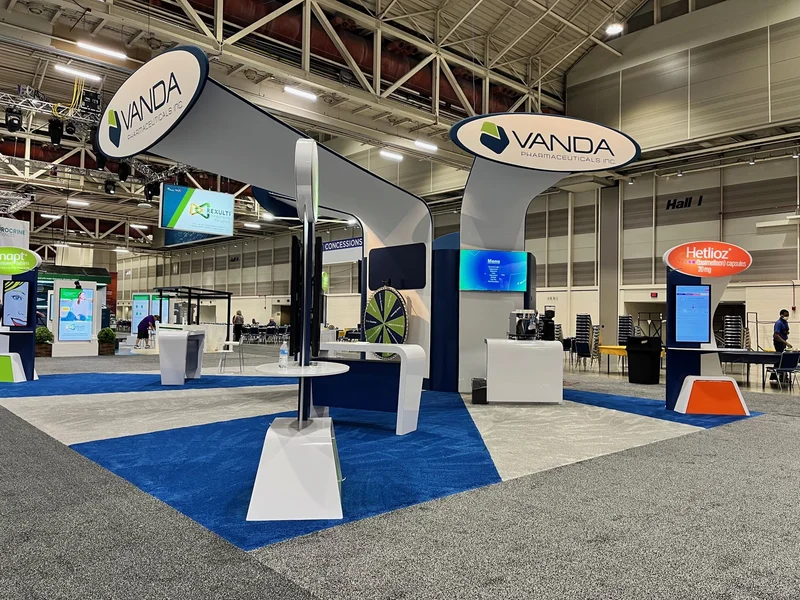
So what is the real strategy? A biopharma company doesn't need the average hockey fan to recognize its logo in the same way a beer or auto manufacturer does. Vanda’s success isn't measured in jersey sales. This kind of spending is a B2B play disguised as a B2C campaign. The audience isn't just the 17,000 people in the UBS Arena; it's the investors, the regulators, the politicians, and the institutional players who also happen to watch sports.
This is less about selling a specific therapy and more about establishing corporate gravity. It's about ensuring that when the name "Vanda Pharmaceuticals" comes up in a boardroom on Wall Street or a hearing on Capitol Hill, the immediate association is one of stability, scale, and civic engagement—the kind of company that sponsors the local teams. It’s a soft power play, executed with the brute force of a marketing budget.
The Islanders deal alone, while financial terms were not disclosed, likely falls in the high-single-digit millions per year (similar NHL patch deals are valued at up to $10 million annually). When combined with the Mystics patch, the GW sponsorship, and the significant Monumental/Capital One Arena partnership, we're looking at a total annual commitment that could easily be in the $20 million range—to be more exact, it’s likely approaching a $25 million annual spend once you factor in the required marketing activations around these deals. What is the expected return on that capital? What key performance indicator justifies this sudden, nine-figure bet over a multi-year horizon?
The strategy feels like an attempt to buy ambient awareness. It's an expensive way to become part of the background noise in two of the most powerful cities in the world. For a company focused on developing therapies for "unmet medical needs," this is an awful lot of money being spent on something other than research and development. It begs the question of whether this is a sign of overwhelming confidence or a defensive measure against an unseen challenge.
A High-Stakes Visibility Play
Ultimately, this isn't about hockey. It's not about basketball. It's about perception. Vanda is purchasing legitimacy and embedding itself into the cultural fabric of two critical markets. This is a high-cost, high-stakes campaign to elevate the Vanda corporate brand from a name on a stock ticker to a household name—at least in the households that matter. The real metric for success won't be how many Islanders fans can name their jersey sponsor. It will be whether the right people in Washington and New York see that logo and subconsciously register Vanda as a permanent, powerful player. It’s a bold, expensive gamble on the idea that in the worlds of policy and finance, visibility is currency.
Tags: vanda pharmaceuticals
That XBIO Stock Explosion: What the Hell Is Happening and Is It Just Another Pump and Dump
Next PostAST SpaceMobile's Verizon Deal: Why This is the Beginning of the End for Dead Zones
Related Articles