
Crypto ATMs: What They Are and the Inherent Scam Risk
The recent fine levied against Bitcoin ATM operator Coinhub is, on its surface, a minor event. California’s Department of Financial Protection and Innovation (DFPI) hit the company with a $675,000 penalty (California Regulator Fines Bitcoin ATM Operator Coinhub $675K for Violating Law). Of that, a mere $105,000 is earmarked for restitution to customers who were overcharged. In the grand scheme of financial markets, these are rounding errors.
But to dismiss this as just another regulatory slap on the wrist is to miss the signal for the noise. This isn't an isolated data point; it's a key marker in an accelerating trend. The Coinhub fine is the fourth such enforcement action from the DFPI in recent months, and it follows a clear pattern of violations: charging fees above the legal maximum, ignoring daily cash limits, and failing to provide basic, legally required disclaimers on receipts.
This isn't the complex, algorithm-driven malfeasance you might see on Wall Street. This is something far more rudimentary. I've looked at hundreds of regulatory filings, and the violations outlined here—overcharging fees and omitting disclosures—are strikingly simple. They suggest a business model built not on technological innovation, but on exploiting the gaps in consumer knowledge and regulatory oversight. The question isn't just whether these companies broke the rules, but whether their entire value proposition was dependent on the absence of those rules in the first place.
The Payday Lenders of the Digital Age
To understand the coordinated crackdown on crypto ATMs, it's useful to deploy an analogy. These machines function less like traditional ATMs and more like the payday lenders of the digital asset world. They offer a service—quick conversion of cash to crypto—to a specific clientele, often in exchange for opaque and exorbitant fees. They thrive in the gray zones of finance, providing a bridge for those who are unbanked, underbanked, or simply seeking a transaction method with a veneer of anonymity.
And just like the payday loan industry, once regulators turn their attention to the sector, the entire model begins to wobble. The DFPI’s actions in California are not an outlier. The city council in Spokane, Washington, didn't just fine operators; they banned the kiosks outright, citing an increase in scams and financial crime. New Zealand did the same back in July. This week, we saw a similar story from Australia, where the financial intelligence agency AUSTRAC fined an operator named Cryptolink as part of its own crackdown (Australia's AUSTRAC Fines Cryptolink as Part of Crypto ATM Crackdown).
This is a global, correlated movement. When multiple, independent jurisdictions arrive at the same conclusion within a short timeframe, it signals a fundamental problem with the underlying product. Regulators from Sacramento to Sydney are clearly stating that the societal cost of these machines outweighs their utility. What is it that they are all seeing? Are these operators simply unsophisticated businesses that failed to keep up with compliance, or is there something inherent in the design of a cash-to-crypto kiosk that makes it an almost perfect vector for illicit activity?
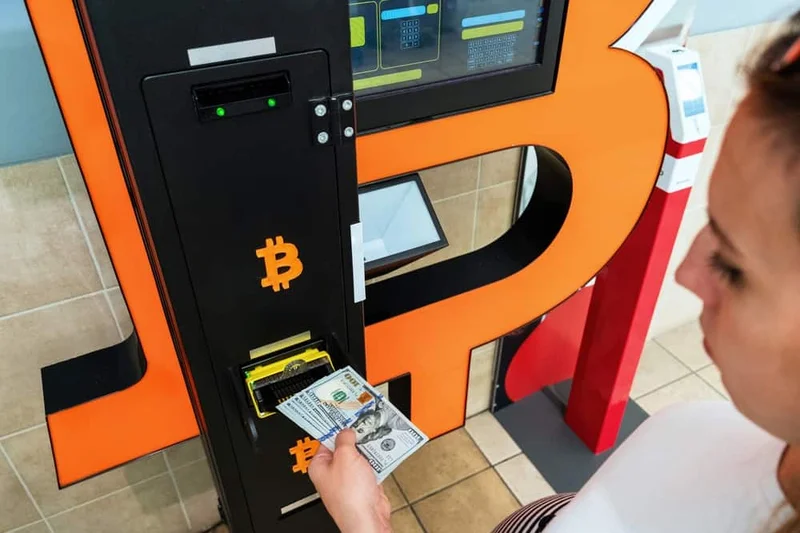
The language from regulators is telling. DFPI Commissioner KC Mohseni didn't issue a dry statement about compliance; he promised to “root out bad actors and scammers who put consumers’ hard-earned money at risk.” That’s not the language of routine enforcement. It’s the language of an exterminator.
A Vector for Fraud
The regulatory fines are one half of the equation. The other, more troubling half is the clear statistical link between these machines and outright fraud. The fines against Coinhub and Coinme are for business practice violations, but the bans in Spokane and New Zealand are a response to crypto ATM scams becoming a public menace.
The anecdotes are piling up into a dataset of their own. This week, police in Massachusetts warned residents after two people lost a total of nearly $7,000 to a "missed jury duty" scam. The perpetrators didn't ask for a wire transfer or gift cards; the Bitcoin ATM was the required instrument of theft. It offers the speed of a digital transaction with the untraceable nature of cash.
And this disproportionately affects the most vulnerable. An FBI report from last year showed that elderly Americans lost a staggering amount of money to crypto fraud—about $3 billion, or to be more exact, just shy of $3 billion in 2024 alone. This demographic, representing only 17% of the population, is a prime target. The Treasury Department’s Financial Crimes Enforcement Network (FinCEN) was concerned enough to issue an urgent warning specifically about the role of Bitcoin ATMs in scams targeting seniors.
This is the part of the analysis that clarifies the entire picture. Regulators aren't just cracking down on high fees (which is a legitimate consumer protection issue). They are moving to dismantle a piece of financial infrastructure that has become a primary tool for criminals. The convenience these crypto ATM machines offer to a tiny fraction of legitimate users is dwarfed by the immense damage they facilitate. The core function of a what is a crypto atm search is now less about curiosity and more about self-defense. The machines have become synonymous with risk, a physical manifestation of the internet's dark alleys, conveniently located in your local convenience store.
This Isn't a Correction; It's a Culling
Let's be precise. The series of fines and bans targeting the crypto ATM industry is not a sign of a maturing market finding its regulatory footing. It is the beginning of an extinction event for a flawed business model. The entire premise was built on regulatory arbitrage—operating in a space that was too new and too niche for authorities to police effectively. That era is definitively over.
The data points to a terminal decline. The product's primary use cases have been co-opted by fraud, its public perception is irrevocably tarnished, and its operational model is fundamentally incompatible with standard consumer protection laws. The fines are not meant to correct behavior; they are meant to make the business so unprofitable and legally fraught that operators simply close up shop. These machines are a transitional technology whose time has passed, and regulators are now simply sweeping away the remains.
Tags: crypto atm
The Chip Keyword Anomaly: A Data-Driven Look at Why Cookies Overwhelm Semiconductor Search
Next PostSpectrum TV: A Breakdown of Packages, Pricing, and Channel Options
Related Articles