
The End of the Farmers' Almanac? A Chance to Plant New Seeds of Wisdom Okay...
2025-11-08 15 farmers almanac
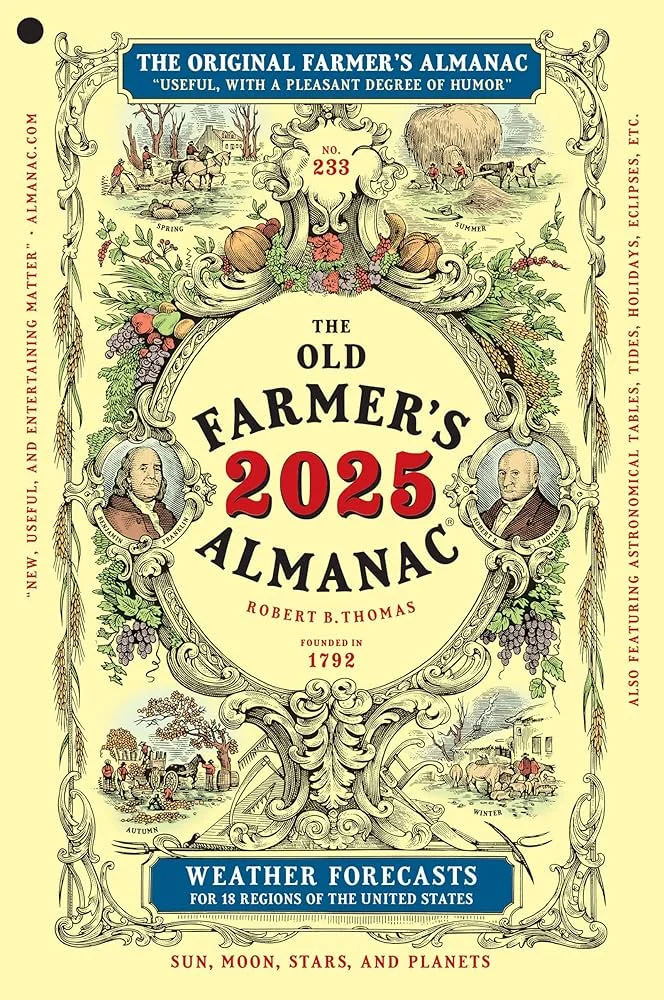
The Farmers' Almanac, a publication older than sliced bread and arguably just as ubiquitous, is calling it quits after the 2026 edition. The announcement, delivered via a press release on Thursday, marks the end of a 200-year run. Copies of the farewell edition are already hitting shelves (both physical and digital), and the Almanac's website will remain active until December 2025.
Two hundred years is a long time. Think about it: that's before the Civil War, before electricity became commonplace, before indoor plumbing was the norm. The Farmers' Almanac has been a constant, a predictable presence offering weather predictions, planting guides, and folksy advice. Many grew up hearing their parents or grandparents quote from it – a shared cultural touchstone. But the question is, in an age of hyper-specific weather apps and instant information, did it still matter?
The press release expresses gratitude to loyal readers and encourages them to keep the publication's spirit alive. A noble sentiment, but let's be honest: how many "loyal readers" are there, really? And more importantly, were they paying subscribers or just passively receiving copies from their great-aunts? Details on readership numbers in recent years are, shall we say, conspicuously absent from the announcement. What were the circulation numbers over the last 5, 10, or 20 years? And what percentage of those copies were actually sold versus distributed free? This data would be crucial to understanding the publication's true trajectory.
Here's where things get interesting (or, rather, uninteresting, from a data perspective). The announcement focuses on the Almanac's legacy, its role in family life, and the warm fuzzies associated with tradition. All well and good, but it completely avoids any mention of the numbers that would actually tell the story of its decline. It's like a company celebrating its 100th anniversary while quietly filing for bankruptcy.
I've looked at hundreds of these types of announcements, and this omission is telling. A thriving publication would be shouting about its subscriber base, its engagement metrics, its growth in new markets. The silence is deafening. It suggests a slow, steady decline that culminated in a decision to pull the plug rather than bleed out slowly.
The Farmers' Almanac team encourages readers to "keep the spirit of the publication alive." That's a nice thought, but I suspect the "spirit" is already being kept alive primarily through nostalgic memories rather than active engagement. How many readers under the age of 40 even know what the Farmers' Almanac is, let alone rely on it for planting advice?
This raises a key point: in the age of big data, is there still room for a publication based on, shall we say, less-than-scientific methods of weather prediction? The Almanac's forecasts, while charmingly folksy, have always been more of a guessing game than a precise science. (And this is the part of the report that I find genuinely puzzling.) In a world where we can track weather patterns down to the millimeter, does anyone really need a long-range forecast based on sunspots and folklore?
The Farmers' Almanac's demise isn't a tragedy; it's a market correction. It's a relic of a bygone era finally succumbing to the cold, hard realities of the 21st century. Nostalgia is a powerful force, but it doesn't pay the bills.
Tags: farmers almanac
Related Articles
The End of the Farmers' Almanac? A Chance to Plant New Seeds of Wisdom Okay...
2025-11-08 15 farmers almanac