
Kyle Busch's 750th Start: What the Data Reveals About His Phoenix Performance & the Tire Controversy
The Discrepancy of 750 Starts
Numbers in motorsport are often used for celebration. A 500th start, a 50th win, a second championship. They are clean, immutable markers of success. When Kyle Busch took the green flag at Phoenix Raceway, he logged his 750th career Cup Series start, a milestone that generated the straightforward headline: Kyle Busch makes 750th career Cup Series start at Phoenix. On paper, this is an elite data point, a testament to longevity and sustained performance at the highest level of the sport. It speaks to a career that began with Hendrick Motorsports, found legendary status at Joe Gibbs Racing—where 56 of his 63 victories and both of his championships were secured—and now continues under the Richard Childress Racing banner.
But data requires context. A single number, no matter how impressive, can be profoundly misleading if viewed in a vacuum. Busch’s 750th start is a historical marker, yes, but it arrived at the precise moment his career performance metrics are in a statistical freefall. The milestone wasn't a coronation; it was a paradox. He concluded the 2025 season with a 17.9 average finish, the third worst of his 21 full-time seasons. More critically, he extended his winless streak to 93 races. That’s not a slump; it’s a sustained, multi-year pattern of regression for a driver once considered a generational talent.
To put it in perspective, Busch won three times in his first 15 races with RCR in 2023. That initial surge suggested a correlation between a new environment and renewed success. That correlation has since completely disintegrated. For the second consecutive year, he failed to even qualify for the playoffs. So, what are we to make of this 750th start? Is it a celebration of a Hall of Fame career, or is it simply the odometer clicking over on a vehicle that has lost significant horsepower?
A Microcosm of Chaos in the Desert
The Phoenix finale itself serves as a perfect microcosm of Kyle Busch’s current reality. The race was an exercise in chaos, dominated by tire failures that systematically derailed the championship hopes of drivers like Denny Hamlin and Chase Briscoe. The track was littered with cautions for cut Goodyear tires. Busch himself was a victim, suffering a flat right-rear on lap 148 that forced an unscheduled pit stop. Yet, in his post-race analysis, he was surprisingly analytical, almost detached. “I don’t think it was anything with Goodyear’s fault,” he stated, a comment that led to headlines like Kyle Busch Hands Clean Chit to NASCAR’s $1.97 Billion Partner Amid Caution-Filled Phoenix Run.
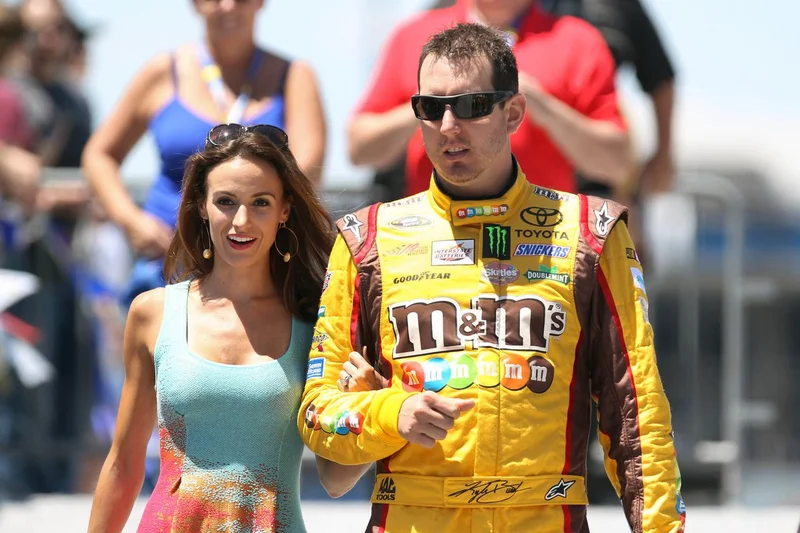
This is a fascinating response. Here is a driver, mired in the longest winless streak of his career, whose day was directly compromised by the same issue plaguing the field, and his first instinct is to defend the manufacturer. It’s the calculated response of a 40-year-old veteran, not the fiery outburst of the “Rowdy” persona. He understands the technical variables at play. But it also highlights his status as an outsider. He wasn’t racing for a championship; he was just trying to salvage a top-ten finish. The pressure was off. His saving grace, by his own admission, was a late-race caution for William Byron that allowed him to get the wave-around and return to the lead lap. He lucked into a fifth-place finish. It was a positive result, but the underlying process to get there was anything but.
I've analyzed hundreds of performance reports across different industries, and this is the part of Busch's current dataset that I find genuinely puzzling. The on-track performance is deteriorating, yet his public analysis remains sharp. This is happening while, off the track, he is embroiled in a lawsuit against an insurance company for a staggering $8.5 million, alleging he was misled into a retirement plan where his invested capital—about $10.4 million, to be more exact—vanished. He spoke about it on the eve of the finale, stating a mission to go public so others aren't similarly deceived.
This isn't just background noise; it's a critical confounding variable. We have a driver navigating a significant on-track decline while simultaneously fighting a massive off-track financial battle that he himself describes as a "lie." To think these two events are uncorrelated is naive. It’s like trying to analyze a company’s quarterly earnings without looking at its balance sheet. The liabilities are mounting on all fronts.
An Asset in Depreciation
Kyle Busch's career is a blue-chip asset. The 63 wins and two championships are historical facts that guarantee his place in the Hall of Fame. The 750th start is a certificate of that long-term value. However, all available forward-looking indicators suggest this asset is in a state of rapid depreciation. A 93-race winless streak is not an anomaly; it is the new trend line. Finishing fifth at Phoenix was an outlier, a dead cat bounce enabled by someone else's misfortune. The fundamental performance isn't there. When you layer on the immense distraction of a multi-million-dollar lawsuit, the projection becomes even bleaker. The milestone is a moment to look back at the asset's peak value, but it does nothing to alter the reality of its current market price.
Tags: kyle busch
Nvidia's AI Future: The Global Roadmap, Market Hype, and What Comes Next
Next PostBalancer's $70 Million Transfer: Attack Suspicions and What We Know
Related Articles