
Gordie Howe Bridge Opening Delayed: New Timeline and the Official Explanation
The Gordie Howe Bridge: Deconstructing the Discrepancy in the Final 2%
In the world of large-scale infrastructure projects, timelines are less a matter of physics and more a matter of probability. The Gordie Howe International Bridge, a monumental $5.7 billion undertaking designed to link Detroit and Windsor, is the latest case study in this principle. The Windsor-Detroit Bridge Authority (WDBA) recently announced that the bridge's opening is now slated for early 2026, a delay from its original 2025 target (Gordie Howe Bridge won’t open until early 2026, officials say - Detroit Free Press).
On the surface, the numbers present a paradox. The project is reportedly 98% complete. The massive bridge deck was physically connected this summer, a moment of tangible, photogenic progress. Crews are now working on the finer details: installing electrical systems, drainage, and the nearly 5,000 LED esthetic lights that will give the structure its signature glow. At the ports of entry on both sides of the border, the focus has shifted to interior finishes, paving, and landscaping. The raw construction, the heavy lifting, is effectively over.
So, where is the disconnect? If a project is 98% finished, a delay measured in months, not weeks, demands a more granular analysis. The official explanation points to a need for more time for "quality reviews, testing, commissioning, and to allow border agencies and operating teams sufficient time to prepare." This is a standard, almost boilerplate, justification for any project of this scale. But it obscures a more fundamental truth about complex systems. The final 2% of this project isn't about concrete and steel; it's about software, bureaucracy, and human integration.
The Hardware Is Built, But the Operating System Is Still in Beta
I've analyzed hundreds of corporate and government project timelines, and "quality review" is often a convenient, opaque bucket for a host of unforeseen complexities. To understand the Gordie Howe delay, it’s best to use an analogy from my old world: building a new, proprietary trading platform. You can spend years and millions of dollars constructing the physical data centers and laying the fiber optic cables. You can install every server rack and run every diagnostic. By all physical metrics, the hardware is 100% complete. But the platform is useless until the software—the complex code that executes trades, manages risk, and ensures regulatory compliance—is flawlessly commissioned.
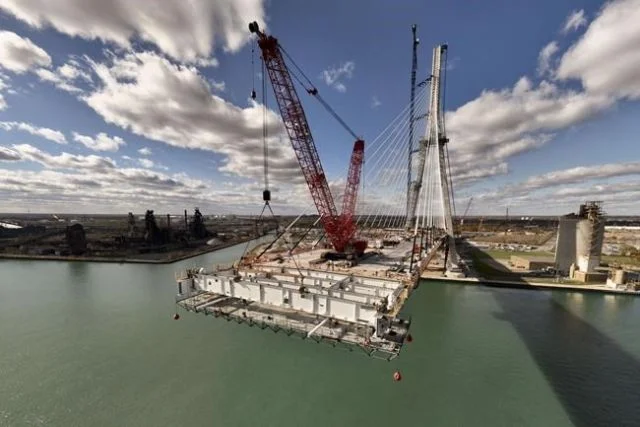
The Gordie Howe Bridge is not just a road over water; it's a highly complex piece of international machinery. The bridge itself is the hardware. The "software" is the intricate web of systems that make it function: the tolling payment systems, the barrier gates, the lighting grids, and, most critically, the operational protocols for the U.S. and Canadian border agencies. The physical structure (the U.S. Port of Entry has 36 primary inspection lanes, while the Canadian side has 24) is just a stage. The real performance involves two separate federal governments, each with its own security mandates, staffing requirements, and technological standards, attempting to synchronize their operations in a live environment.
This is where the official narrative starts to feel thin. The WDBA states the delay allows border agencies "sufficient time to prepare." This raises an immediate, and rather pointed, question: were the operational readiness timelines for these key stakeholders not integrated into the master plan from the project's inception in 2020? A delay of this length to accommodate the end-user suggests a significant planning discrepancy. It implies that the construction timeline and the operational-readiness timeline were not running on parallel, synchronized tracks. What specific commissioning tests, from toll gates to customs software, have proven so challenging that they require this extended buffer? We're not told.
The physical progress is undeniable and impressive. The span will be the largest cable-stayed bridge in North America, a genuine engineering feat. But celebrating the 98% completion mark feels like a vanity metric when the remaining 2% represents the entire functional purpose of the $5.7 billion investment. You can build the world's most advanced supercomputer, but if the operating system keeps blue-screening, you've just got an expensive box of silicon.
The Unquantified Variable
The core issue here is the difference between a complicated project and a complex one. Pouring concrete is complicated; it requires expertise and precision, but the variables are known. Integrating the customs and border protection agencies of two sovereign nations is complex; the variables are adaptive and often political. You can create a Gantt chart for installing 164 streetlights. It’s much harder to chart the process of hiring, training, and deploying hundreds of federal agents to a new, untested facility.
My analysis suggests the delay has little to do with the physical bridge and everything to do with the human and bureaucratic systems that must inhabit it. The construction crews have largely delivered. The lag is now in the hands of administrators, IT specialists, and government agencies. This isn't a failure of engineering. It's a classic case of underestimating the friction of institutional integration. The 98% figure measures the steel, the pavement, and the wiring. It doesn't, and can't, measure bureaucratic inertia or the nuanced challenges of cross-border cooperation. That final 2% is where the clean, predictable world of engineering collides with the messy, unpredictable reality of human systems.
Tags: gordie howe bridge
The Social Security Paper Check 'Deadline' Was a Joke: Why the Government Caved and What Happens Next
Next PostEVAA Protocol Goes Decentralized: Why This Changes Everything
Related Articles