
Warren Buffett and the Rise of "Moonshot" Compensation: What It Means for the Future of Innovation
The Envy Machine Is Overheating
When I first read the details of Elon Musk’s new compensation package—the one that could make him the world’s first trillionaire—I didn't feel anger. I honestly just sat back in my chair, speechless. It wasn't the number itself, as astronomical as it is. It was the realization that we’re watching a fundamental piece of our economic operating system glitch out in real-time. This isn't a story about one man's wealth; it's a story about a system that has begun to reward the idea of future value more than the creation of present-day, tangible progress.
And just like that, the glitch became a feature. The very next day, Rivian’s board essentially copied and pasted the code, announcing a $4.6 billion package for its CEO, RJ Scaringe, explicitly modeled on Musk’s.
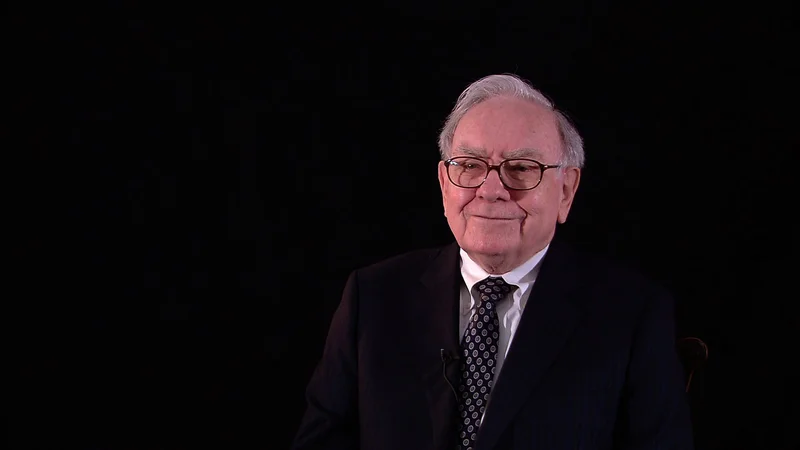
Warren Buffett, in his final, poignant letter to shareholders, gave this phenomenon a name. He didn't call it innovation or ambition. He called it what it is: envy. He wrote, “What often bothers very wealthy CEOs—they are human, after all—is that other CEOs are getting even richer.” This is the kind of breakthrough that reminds me why I got into this field in the first place—to understand the human systems behind the technology. Buffett nailed it. We’ve built a corporate culture that runs on a feedback loop of jealousy, where success is no longer measured against a company’s mission, but against the compensation package of a competitor. It's no wonder that, as Fortune reported, Following Elon Musk's $1 trillion comp, Warren Buffett says more CEOs are seeking eye-popping pay.
The very regulations designed to bring transparency and moderation to CEO pay have backfired spectacularly. What was meant to be a humbling disclosure—a way of saying, "Here's how much the boss makes compared to everyone else"—has turned into a high-score list for the executive class. It’s a corporate cold war, where the weapons are stock options and the fallout is a widening chasm between the boardroom and the factory floor. The numbers are staggering: the CEO-to-worker pay ratio has ballooned to 632:1. Let that sink in. Is any single human’s vision, leadership, or genius really worth 632 times the contribution of the average person building, selling, and supporting the product?
When Incentives Go Off the Rails
This isn't an anti-capitalist rant; it's a pro-innovation one. My concern isn't about the morality of wealth, but about the mechanics of progress. When you tie a CEO’s entire compensation to a single, volatile metric like market capitalization—in Musk's case, an almost unimaginable $8.5 trillion target—you fundamentally change their mission. The goal is no longer just to build the world’s best electric vehicles or to get humanity to Mars. The goal becomes, by definition, to hit the stock market number that unlocks the treasure chest.
This uses a concept called incentive alignment—in simpler terms, it means you get what you pay for. And right now, we are paying for market cap optimization. But is that the same as true, world-changing innovation? Does a CEO who is laser-focused on a seven-year stock price target have the same appetite for the kind of risky, ten-year R&D that leads to genuine breakthroughs? What happens to the crazy ideas, the ones that don't have a clear path to monetization but could redefine an industry?
Even the big money is getting nervous. Norway’s massive $2 trillion sovereign wealth fund, a major Tesla stakeholder, voted against Musk’s package. They cited concerns about the sheer size, the dilution of stock for other shareholders, and the "key person risk." They understand that when you make one person the single point of success—or failure—for a company of that scale, you’re not building a resilient system. You’re building a pyramid on a single point. It's a beautiful structure, but a terrifyingly unstable one. We have to ask ourselves a hard question: are we designing systems that create sustainable, long-term value for society, or are we just building ever-more-elaborate machines to make a few people impossibly rich?
Recoding Our Definition of Success
So how do we fix this? How do we reboot a system that’s clearly stuck in a dangerous loop? The answer isn't to cap salaries or punish success. That's thinking in the old paradigm. The answer is to get more creative and more holistic about how we define and reward value creation. We need to upgrade the source code of corporate incentives.
Imagine if, instead of being tied solely to market cap, a CEO's "moonshot" bonus was tied to a portfolio of metrics that reflect genuine, long-term innovation. What if a significant portion was unlocked only when the company successfully launched a product that created an entirely new market? Or when their manufacturing process became truly carbon-neutral? Or when employee retention and satisfaction hit industry-leading highs? Suddenly, the CEO’s mission isn’t just about pleasing Wall Street; it’s about building a company that is durable, innovative, and a genuinely good place to work.
This is the kind of paradigm shift that reminds me of the transition from the closed guild systems of the middle ages to the open, dynamic capitalism that powered the industrial revolution. We’re at a similar inflection point. The current model of top-down, hyper-concentrated reward is becoming a bottleneck to progress. The future demands a more distributed, more resilient, and more human-centric model. It requires us to see a company not as a vehicle for one person's wealth, but as a collective enterprise where everyone who contributes to the mission gets to share in the rewards. This isn't just a fantasy; it's the next logical step in designing better, smarter, and more effective economic engines for the 21st century.
It's Time to Redefine the Win Condition
Ultimately, this isn't about Elon Musk or any single CEO. It's about the story we tell ourselves about success. A system that produces a trillion-dollar compensation package alongside a 632:1 pay gap isn't broken; it’s working exactly as it was designed. The problem is that the design is now obsolete. We are trying to build the future with an economic blueprint from the past. True, lasting innovation doesn't just enrich a founder; it enriches society. It lifts all boats, not just the CEO's superyacht. We have the intelligence and the tools to recode our incentives for collective genius. We just need the vision and the will to write the first line.
Tags: warren buffett
Pfizer Drops $10 Billion on Metsera: What This Really Means for the Stock (And Why I'm Not Buying It)
Next PostSpaceX's Record-Shattering Launch: What it Means for Our Cosmic Destiny
Related Articles