
The 10-Year Treasury Yield's 4% Milestone: Why This Moment Matters and What Comes Next
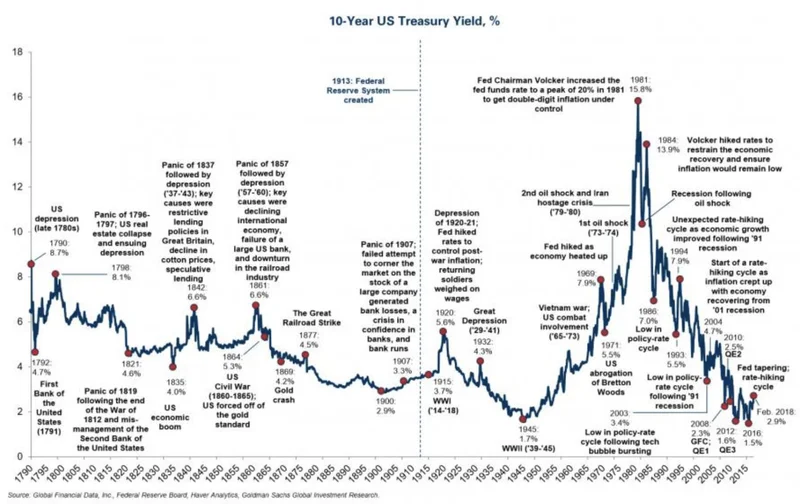
You can almost hear the hum of the servers, the low, anxious murmur in the boardrooms. When a figure like JPMorgan’s Jamie Dimon—a man who sits at the very apex of our global financial architecture—talks about seeing a “cockroach” in the system, the world listens. And when Bill Gross, the so-called “Bond King,” declares that the 10-year Treasury yield “has no business below 4%,” it’s not just an opinion. It’s a tremor. It’s the sound of the old guard looking at the machine they built and admitting, out loud, that they hear something rattling inside.
They’re talking about debt, deficits, and the specter of failing regional banks. Gross’s logic, as detailed in The 10-Year Treasury Yield ‘Has No Business Below 4%,’ Bond King Says, is blunt: there’s simply too much government debt flooding the market for investors not to demand a higher price for it. It’s a classic, old-world diagnosis of an old-world problem. And they aren’t wrong. The tremors are real. The rattling is getting louder.
But what if they’re looking at the problem through the wrong end of the telescope? What if the “cockroaches” aren’t a sign of impending collapse, but a symptom of a monumental, tectonic shift? We’ve been trying to fine-tune this impossibly complex financial machine for decades, adding new gears, patching leaks, and bolting on regulations. It’s become a colossal steam engine—powerful, yes, but also opaque, inefficient, and prone to blowing a gasket. When I hear these warnings, I don't just hear fear. I hear an invitation. I hear the sound of an old paradigm groaning under its own weight, making room for what comes next.
Are we really spending all our energy trying to recalibrate this creaking engine, or do we finally have the courage to ask if it’s time to design a new one entirely?
From Patches to Protocols
For years, the promise of technology in finance was about making the old system faster. It was about shaving microseconds off trades, building slicker banking apps, and using algorithms to do the same old things with more speed. That was never the real revolution. That was just putting a turbocharger on the steam engine. The real revolution—the one that’s happening right now in quiet, collaborative corners of the internet—is about changing the engine’s fundamental design.
When I first saw a decentralized autonomous organization—or DAO, which is basically a company that runs on code and is governed by its members instead of a C-suite—execute a multi-million dollar budget decision with perfect transparency and without a single traditional manager, I honestly just sat back in my chair, speechless. We’re talking about systems built on public ledgers, which are essentially shared digital notebooks that everyone can see but no one can unilaterally change, and this creates a level of trust and accountability that the old world can only dream of. This isn't just a faster way to move money; it's a fundamentally different way of organizing value and trust.
This is the kind of breakthrough that reminds me why I got into this field in the first place. The sheer potential here is staggering—it means we can build financial instruments that are transparent by default, contracts that execute themselves without biased intermediaries, and networks where value flows as freely as information. That’s not a patch. That’s a new protocol for human cooperation.
Of course, with this incredible power comes profound responsibility. We can’t just build new systems; we have to build better ones. As we architect these new financial worlds, how do we embed fairness into the code? How do we ensure they don’t just replicate the power imbalances of the old world in a new, digital wrapper, but instead create genuine access and opportunity for everyone?
The Light at the End of the Tunnel
The fear from Wall Street is understandable. When you’ve spent your life mastering the intricate levers of the steam engine, the idea of a silent, solid-state fusion reactor is terrifying. It makes your expertise obsolete. Dimon’s cockroach metaphor is perfect, but I see it differently. Cockroaches thrive in the dark, in the damp, forgotten cracks of a foundation. They scatter when you turn on the light.
That’s what this new wave of technology is. It’s a floodlight. It’s a movement toward radical transparency, where hidden debts and tangled counterparty risks—the very things that caused the 2008 crisis—can’t fester in the shadows. The anxiety we’re feeling in the markets isn’t the death rattle of our economy; it’s the discomfort of a system having its darkest corners illuminated for the first time.
This isn't a transition that will happen overnight. It will be messy, and the guardians of the old system will fight it every step of the way. But just as the printing press democratized information and the internet democratized communication, this technological shift is beginning to democratize finance. We are moving from a system based on trusting powerful institutions to one based on verifiable mathematics.
So, when I read the headlines about bond yields and bank failures, I don’t feel the pessimism that Gross and Dimon project. I feel a sense of profound, historical opportunity. We are the generation that gets to be here for the transition. We get to see the blueprints, contribute to the code, and help build the foundations of a more resilient, transparent, and equitable financial world. What an incredible time to be alive.
The Noise Before the Signal
Let’s be clear. The fear is real, but it’s a symptom, not the disease. The rattling of the old machine is the sound of its own obsolescence. The pronouncements of the "Bond Kings" and banking titans feel less like prophecy and more like a eulogy for a system that can no longer contain the future. The "cockroaches" they see are just the first signs that the foundations are being shaken, not to bring the house down, but to build something stronger in its place. This isn't an ending. This is the messy, loud, and absolutely thrilling beginning of what comes next.
Tags: 10 year treasury yield
The Gold Price Charade: What's *Really* Going On and Why You Should (Probably) Ignore It
Next PostThe Nationwide Gas Price Drop: What's Really Driving It and What Comes Next
Related Articles