
The Nasdaq's Historic Surge: What's Really Driving It and What It Means for Our Future
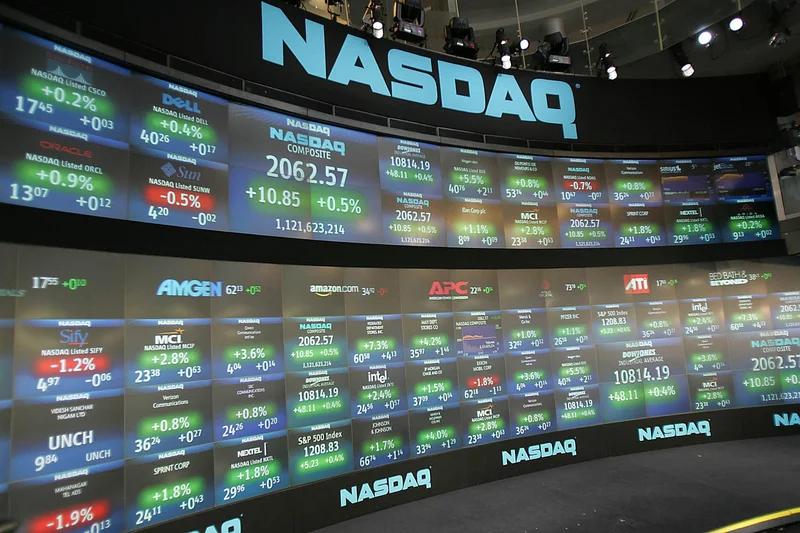
The screen flickered. A sea of red and green, a jumble of numbers that, for a moment, told a story of utter confusion. On Tuesday, the Dow Jones climbed a respectable 202 points, yet the tech-heavy Nasdaq tumbled almost a full percent. The S&P 500, our broadest measure of the market, couldn’t make up its mind and ended slightly down. Headlines screamed about new trade tensions, with China banning dealings with a handful of South Korean subsidiaries in a swipe at Washington.
This is the daily noise. It's the static, the hiss, the chaotic drumbeat of short-term fear and greed that dominates our financial news cycle. It’s loud, it’s distracting, and it’s incredibly seductive. It makes us feel informed, like we have our finger on the pulse of the world. But I’m going to tell you something that might sound radical: most of it is meaningless.
We are spending far too much time trying to decipher the static, and we’re missing the music entirely. There is a powerful, underlying symphony playing—a melody of innovation and progress so profound that the daily squabbles over tariffs and quarterly earnings are little more than a cough from the audience. The real question isn’t why the Nasdaq dropped 0.8% on a random Tuesday in October. The real question is: are you tuned into the right frequency to hear what’s actually happening?
The Seductive Static of the Short-Term
Let’s break down the noise from Tuesday, because it’s a perfect case study. According to reports on How major US stock indexes fared Tuesday, 10/14/2025, the Dow, full of industrial stalwarts, went up. The Nasdaq, the engine of our future, went down. Meanwhile, the Russell 2000—which is basically a snapshot of America’s smaller, more nimble companies—surged 1.4%. A headline about China and a South Korean shipbuilder sent ripples of anxiety through the market. If you only looked at that single day, you’d walk away with a headache and a sense of deep uncertainty.
This is the financial equivalent of looking at a single pixel on a high-definition television and trying to understand the movie. You see a flash of color, a flicker of light, but you have absolutely no context for the epic story unfolding across the entire screen. The daily market movements are driven by algorithms, by knee-jerk reactions to news alerts, by whispers and rumors. They are a reflection of our collective anxiety, not our collective potential.
For decades, we’ve been trained to react to this static. A bad inflation report, a geopolitical flare-up, a disappointing earnings call from a single company—we treat each event as a potential cataclysm. But what if these are just the minor-key notes in a much grander composition? What if the real story isn't in the day-to-day volatility, but in the unstoppable, long-term crescendo of human progress?
Tuning Into the Symphony of Innovation
Now, let’s change the channel. Let’s zoom out from that single, confusing day and look at the year. The Nasdaq, despite its bad day, is up over 16% for the year. The S&P 500 is up 13%. This isn’t just a recovery; it’s a powerful statement. But the truly mind-bending data comes when you look at the last few years. The Nasdaq soared 43% in 2023 and 29% in 2024. History tells us something incredible about trends like this. In the past 50 years, every bull market that has lasted more than three years has gone on to run for an average of eight years.
This isn’t just a market trend, it’s a feedback loop of human ingenuity where every breakthrough in AI, biotech, and clean energy builds on the last, accelerating the pace of what’s possible until the future starts arriving not in years, but in months. This is the music. It’s the powerful, melodic theme of technological deflation, where things get better, faster, and cheaper, creating value on a scale we’ve never seen before.
Look at a company like Netflix. In its latest quarter, revenue climbed 16% and earnings per share shot up an astonishing 47%. This isn't just a media company winning a streaming war. This is a technology platform leveraging data, global scale, and creative innovation to redefine an entire industry. When I see a company like Netflix post those kinds of growth numbers in a crowded market, I honestly feel a jolt of excitement. This is the kind of progress that reminds me why I got into this field in the first place. It’s a tangible piece of evidence that the symphony is real.
This technological momentum is the most powerful force in the global economy today, and it’s not just about one company or one index. It’s a paradigm shift as fundamental as the printing press or the steam engine. It’s about the compounding, exponential growth of our ability to solve problems. So why are we still letting the daily static of trade spats and market jitters drown it out? What other world-changing innovations are we ignoring because we’re too busy staring at the flickering red and green lights of a single trading day?
Of course, with this incredible power comes immense responsibility. We have to steer this technological ship with a firm hand on the ethical rudder, ensuring these gains are distributed widely and that we build a future that is not only more advanced, but more human. The music of innovation must be a song of inclusion, not just disruption.
This Isn't a Cycle, It's a Paradigm Shift
Forget the daily noise. The push-and-pull of the Dow and the Nasdaq on a Tuesday is a sideshow. The real story, the one that will define this century, is the relentless acceleration of what humans are capable of. We are living through the steepest part of the exponential curve of progress. The signal isn't in the market's daily volatility; it's in its staggering long-term growth, fueled by a technological revolution that is just getting started. It's time we all learned to stop listening to the static and started appreciating the symphony.
Tags: nasdaq index
The Boss's Day Charade: Why It's a Corporate Sham and That Absurd New Survey
Next PostThe Yield Basis Breakthrough: What the Binance Listing and Airdrop Mean for the Future of Finance
Related Articles