
Goldman Sachs' Q3 Earnings: The Key Numbers and Why the Stock is Stalling
It’s a classic Wall Street paradox, the kind that separates the headline-readers from the analysts who dig into the footnotes. Goldman Sachs just posted its third-quarter earnings, and on the surface, it was a blowout. Net revenue soared 20% year-over-year to $15.18 billion, crushing the consensus estimate. Earnings per share came in at $12.25, a solid beat against the expected $10.86. The firm’s various divisions, from Global Banking to Asset Management, all fired on cylinders.
And yet.
Before the opening bell even had a chance to ring, the crimson red of Goldman's premarket ticker told a story that contradicted every bullish headline. The stock was down. Not by a rounding error, but by a meaningful margin—over 3%, or 3.16% to be exact. This is the kind of market reaction that should make any serious investor pause and ask a simple question: What's Going On With Goldman Sachs Stock Tuesday? - Goldman Sachs Group (NYSE:GS)
The answer, as it almost always is, lies buried in the operational details, far from the celebratory quotes and record-breaking revenue figures. The market isn't reacting to the quarter that just ended; it's pricing in the potential problems for the quarters to come.
The Anatomy of a Flawless Quarter
First, let's give credit where it's due. Goldman's performance was, by most top-line metrics, incredibly strong. The firm reported its third-highest quarterly net revenues ever. This wasn't driven by a single fluke but by broad-based strength. Investment banking fees jumped 42%. Net Interest Income surged an almost unbelievable 64% year-over-year, a function of declining funding costs and a larger pool of interest-earning assets.
Assets under supervision (AUS) hit a new record of $3.45 trillion. This marks the 31st consecutive quarter of net inflows into their long-term fee-based products. That isn't a hot streak; it’s a dynasty. It signals deep, institutionalized trust from clients who continue to park their capital with the firm. In his statement, CEO David Solomon pointed to the "strength of our client franchise," and on this point, the numbers back him up completely.
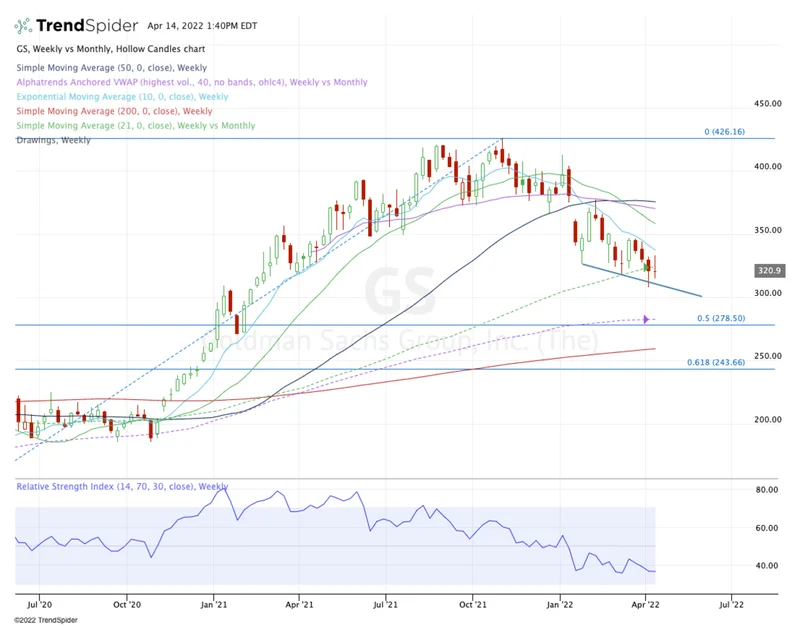
Even the provision for credit losses, a number that reflects the bank's assessment of future loan defaults, declined to $339 million. Everything seemed to point in the right direction. Strong client activity, robust deal-making (ranking first in M&A), and prudent risk management. So why the disconnect? Why would a market, supposedly a forward-looking discounting mechanism, punish a company for delivering precisely this kind of report?
The Cost of Doing Business
The market is a lot like a poker player. It doesn't just look at the cards on the table; it tries to figure out what cards are coming next. And while Goldman’s revenue hand was a full house, the market caught a glimpse of a very expensive tell: operating expenses.
While revenue was up 20%, operating expenses rose 14% year-over-year to a staggering $9.45 billion. This is the figure that set off alarm bells. A stellar earnings report fueled by runaway expenses is like a world-class sprinter who just won a race but revealed a nagging knee injury in the process. Sure, the victory is impressive, but everyone is now worried about the next competition.
This expense line item is the ghost at the feast. The increase was attributed to higher compensation and transaction-based costs, which makes sense in a strong quarter. You pay your bankers more when they close more deals. But a 14% jump is substantial, and it raises uncomfortable questions about the firm's underlying cost structure. I've looked at hundreds of these filings, and this is the part of the report that I find genuinely puzzling. A double-digit percentage increase in operating expenses during what Solomon calls an "improved market environment" suggests that the cost of generating each dollar of revenue is creeping up.
Yes, the firm’s efficiency ratio (a measure of costs as a percentage of revenue) actually improved to 62.1% for the first nine months of the year. But the market isn't just looking at a ratio; it's looking at the trajectory of absolute dollar figures. When expenses are growing at nearly the same clip as revenue, margin expansion becomes a much heavier lift. Solomon mentioned prioritizing the need to "operate more efficiently" with the help of new AI technologies. That's a fine goal, but what is the upfront cost of that AI investment? And is this 14% expense growth a temporary blip tied to a hot quarter, or is it the new normal for a firm retooling for a different technological era? The report doesn't give us a clear answer.
The market sold the stock not because Q3 was bad, but because the underlying data suggests that repeating this performance will be increasingly expensive. The share buybacks ($2 billion) and the generous dividend increase (from $3.00 to $4.00 per share) are shareholder-friendly moves, but they can't mask a fundamental concern about future profitability if costs aren't contained.
The Market Is Pricing in the Hangover
Ultimately, the premarket drop in Goldman Sachs stock wasn't irrational. It was a cold, calculated response to a single, troubling data point hidden beneath a mountain of good news. The market digested the entire report, not just the summary, and concluded that the future might not be as rosy as the present. The revenue beat was the party; the 14% rise in operating expenses is the bill that arrived the next morning. And right now, investors are worried about the size of that bill and whether it’s a one-time expense or the beginning of a very expensive habit.
Tags: gs stock
Starship's Fourth Test Flight: What the Booster Landing and Reentry Data Actually Reveal
Next PostMP Materials Stock: What's Driving the Surge and Do the Numbers Add Up?
Related Articles