
Mad Money: The Show, The Movie, and Why Everyone's Confused
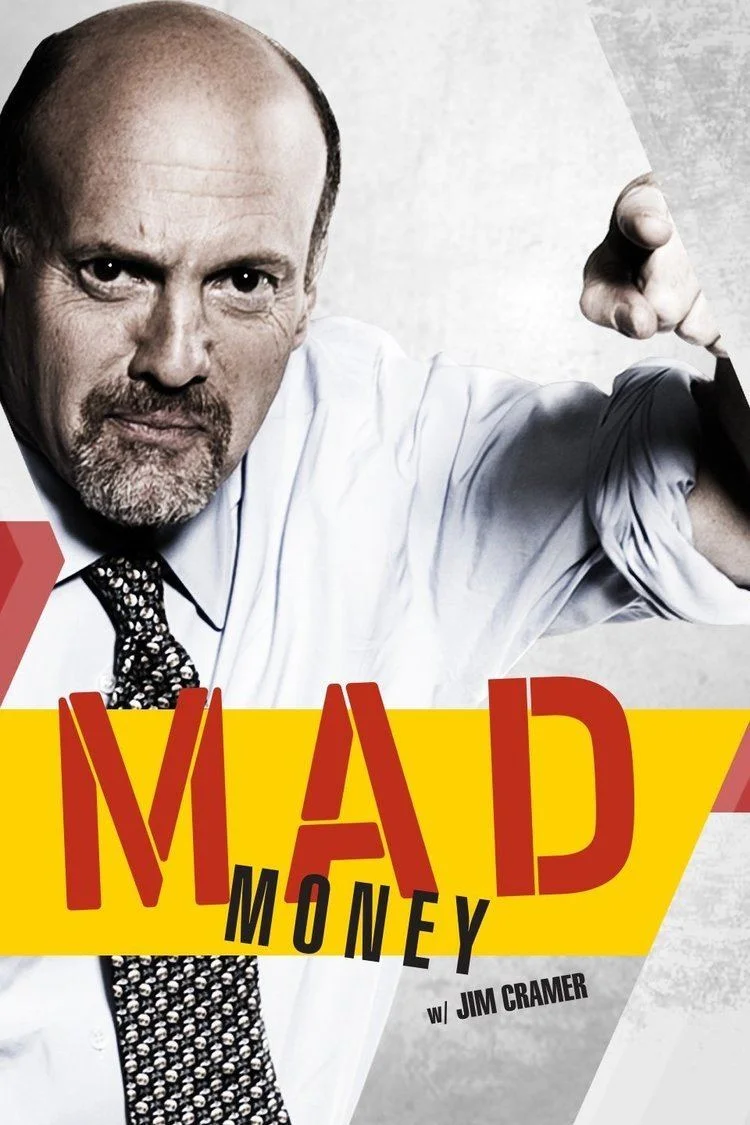
You hear it before you see it. A cacophony of bull horns, cash register sounds, and a man’s voice, perpetually at the edge of a full-throated scream, bouncing off the studio walls. It’s a sensory assault. It’s financial advice as a monster truck rally. It’s Mad Money with Jim Cramer, and honestly, I still can’t figure out if it’s a comedy, a tragedy, or just the longest-running piece of performance art in American history.
Let's be real. Nobody tunes into the Mad Money show for quiet, sober analysis. You don't go to a rock concert for a lullaby, and you don't watch Jim Cramer for nuance. You watch for the spectacle. You watch a grown man with a Harvard law degree throw plastic bulls across the set and smash sound-effect buttons like a toddler who just discovered the microwave.
And for what? To get stock tips that have become so notoriously bad that an entire cottage industry has sprung up around doing the exact opposite of what he says. Think about that for a second. His brand is so potent that even its inverse is a viable financial strategy. It’s absolutely brilliant, in a deeply, deeply cynical way.
The Man, The Myth, The Soundboard
You have to hand it to him. The Jim Cramer origin story is tailor-made for this gig. He wasn’t born on Wall Street, but he got there as fast as he could. Harvard, Goldman Sachs, a successful hedge fund that reportedly made him millions a year. He’s not some outsider trying to decode the system for you; he is the system. His Biography, Mad Money, & Facts reads like a Wall Street playbook: he’s the poacher-turned-gamekeeper, selling you the secrets of the hunt.
The whole Mad Money persona is a masterpiece of branding. It's a character. The rolled-up shirtsleeves to show he’s a “man of the people.” The constant yelling to convey passion and urgency. The props and buttons are the financial equivalent of a circus ringmaster’s whip and top hat, designed to direct your attention and keep you dazzled. He’s not just a host; he’s the conductor of a chaotic orchestra, turning the dry, terrifying world of stock charts into a nightly game show.
But is it a game you can actually win? Or is the point just to keep playing? He gives you a target, a villain (the Fed, short-sellers, market uncertainty), and a hero (himself, and by extension, you, his loyal viewer). It’s a compelling narrative. The only problem is that the stock market isn't a story. It's just math, and the math on Cramer's public picks is... well, it's not great.
The Teflon Don of Dow Jones
It’s genuinely fascinating how little his track record seems to matter. He famously told viewers not to pull their money from Bear Stearns just days before it collapsed in 2008. He’s had countless calls blow up in spectacular fashion. Jon Stewart famously took him to the woodshed on The Daily Show in a clip that should be required viewing for anyone thinking of taking financial advice from television. And yet, here we are. The show goes on.
His continued success is a testament to one thing: entertainment trumps accuracy every single time. He’s a terrible market oracle. No, that’s not quite right—he’s a fantastic performer who happens to use stocks as his props. He’s selling hope, action, and the intoxicating feeling of being in the know. He’s like a weatherman who predicts a hurricane every day. When one finally hits, he can say "I told you so!" and everyone forgets the months of sunny skies he got wrong. It's a foolproof business model, and it's definately working for him.
And I guess that's the part that gets me. This isn't just a TV show; it's people's actual money. Their retirement. Their kids' college funds. And we've just accepted that the most visible financial advisor in America is a guy whose primary skill is being loud. What does that say about us? That we'd rather have a fun liar than a boring truth-teller? I see it everywhere, not just on CNBC. It's all just noise, designed to keep you angry or excited or scared...
Then again, maybe I'm the one who's missing the point. Maybe the actual stock picks don't matter. Maybe Mad Money is just a support group for the amateur investor, a place to feel like you're not alone in the chaotic, rigged casino of the stock market. But if that's the case, couldn't we do better than a guy with a box of sound effects?
The whole thing feels less like the 2008 film Mad Money with Diane Keaton and Queen Latifah—a fun, scrappy heist—and more like a slow-motion heist of public trust. The Mad Money cast on CNBC is just one man, but he plays all the parts: the cheerleader, the scold, the insider, the everyman. It's an incredible performance, but I can't shake the feeling that the audience is the one paying the real price of admission.
He's Selling You a Lottery Ticket
At the end of the day, Jim Cramer isn't selling financial advice. He's selling a feeling. The frantic, high-stakes, big-reward feeling of a lottery ticket. He makes you believe that with one lucky pick, one "Booyah!," you can change your life. He's not the problem, he's just a symptom of a culture that craves easy answers and thrilling narratives more than it values quiet competence. He's the reflection we deserve, and that's the scariest part of all.
Tags: mad money
SX Network's New P2P Betting Model: An Analyst's Breakdown of the Berachain Bet and Tournament Data
Next PostThe Zcash Revival: Price Predictions, Core Tech, and What Reddit Is Saying
Related Articles