
The John Ternus Succession Plan: Who He Is and Why the Data Points to Him as Successor
The question of who will succeed Tim Cook has been treated like a parlor game in Silicon Valley for years. Analysts and tech journalists trade names like playing cards, searching for a visionary, a showman, a ghost of Steve Jobs. But this isn't a game. It's a calculated decision for a company with a market capitalization that rivals the GDP of a G7 nation. The answer isn't going to be a surprise pulled from a hat. The answer is a variable that has been methodically isolated and positioned for years.
When you filter out the noise and look at the objective data—the executive departures, the strategic public appearances, the simple chronology—the conclusion becomes almost mathematically certain. Apple’s next CEO isn't a mystery candidate. He’s been hiding in plain sight all along.
The Controlled Culling of the Old Guard
Before you can install a new variable, you must first clear the existing equation. That’s precisely what we’re witnessing at Apple. The retirement of Chief Operating Officer Jeff Williams by year's end is the most significant data point. For a long time, Williams was seen as the heir apparent, the Cook-protégé who mastered the supply chain labyrinth that forms the bedrock of Apple's financial dominance. His departure isn’t just a retirement; it's a strategic removal of the most obvious alternative.
With Williams exiting, the field of internal candidates narrows dramatically. Other senior executives are also reportedly on their way out, creating a power vacuum that seems tailor-made for a new leader to fill. This isn't chaos; it’s a controlled demolition. Apple is a company that abhors operational surprises. A messy, multi-candidate race for the top job would introduce unacceptable volatility. Instead, they are systematically eliminating other possibilities, leaving one candidate standing under the spotlight. It’s the corporate equivalent of turning off all the other lights in a room to draw your eye to a single object.
What does this tell us? It suggests the decision has been made, at least provisionally, and the current phase is about execution and managing the transition. The narrative being fed through backchannels to reporters like Bloomberg's Mark Gurman feels less like a leak and more like a deliberate, slow-acclimatization strategy. Apple is socializing the idea of its next leader to Wall Street and the public, letting the market price in the change long before it becomes official. It’s a masterclass in managing investor expectations. But why this specific candidate?
An Engineer for an Engineering Problem
John Ternus, Apple’s Senior Vice President of Hardware Engineering, is the variable the entire equation now points to. Let’s break down his profile as a series of data inputs.
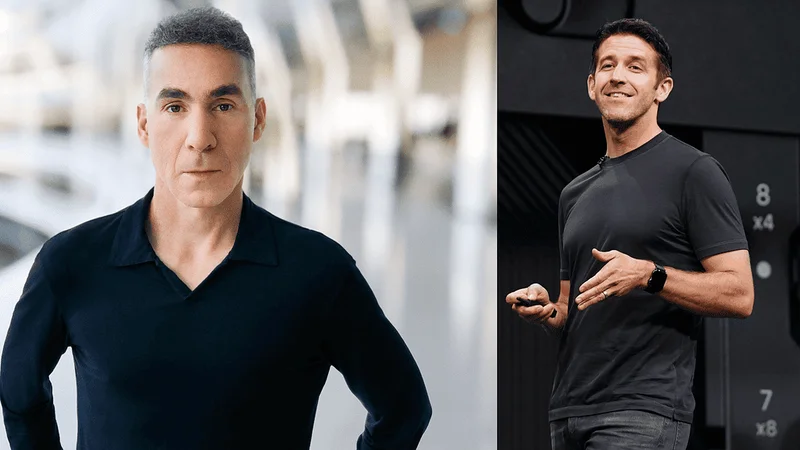
First, the chronological data. Ternus is 50 years old. Tim Cook was also 50 when he took the CEO role from Jobs. This isn’t a coincidence; it’s a pattern. The board is likely signaling a preference for another long, stable tenure—a decade or more—rather than appointing a caretaker CEO. This provides predictability, which is the single most valuable commodity for a company of Apple’s scale.
Second, consider his background. For those wondering Who Is John Ternus, Potential Successor To Apple CEO Tim Cook, he is an engineer, not a supply chain guru or a marketing maestro. He’s been instrumental in the company’s most critical product lines: the Mac, the iPad, and the iPhone. He oversaw the incredibly complex and successful transition to Apple Silicon. I’ve analyzed dozens of corporate succession plans, and the background of the chosen successor is always a powerful indicator of the board’s view of the company's primary challenge. For years, the challenge was scaling operations, a task perfectly suited to Cook. Now, with growth slowing and pressure mounting in emergent fields like AI and mixed reality, the challenge is product innovation. The board is signaling that Apple’s next chapter will be defined by product engineering, not just operational excellence.
Then there’s the qualitative data from his increasing public exposure. We saw him on stage, calm and precise, introducing the redesigned iPhone Air. He lacks the folksy charm of Cook or the messianic intensity of Jobs. He is, simply, a credible, deeply knowledgeable engineer explaining a product. This shift in presentation style is itself a strategic move. Apple is no longer a revolutionary insurgent; it’s a mature, dominant incumbent. It doesn’t need a preacher anymore. It needs a chief architect.
A recent poll I saw indicated that when asked about Ternus succeeding Cook, 44% of respondents were in favor. That’s not the interesting number. The interesting numbers are the 19% who said no and the staggering 37% who were "Unsure." That massive bloc of uncertainty is telling. Ternus is not a celebrity CEO. He is, to the public, largely an unknown quantity. And that might be his greatest asset. He comes without the baggage of a massive public persona, allowing him to be defined by his execution in the role, not by a pre-existing narrative.
The question, then, is whether this steady, engineering-first approach is what Apple truly needs. Can a leader known for refinement and execution, rather than bold, risky disruption, navigate a future where technologies like generative AI threaten to upend the very smartphone paradigm Apple created? Or is the choice of Ternus an admission that Apple's primary goal is no longer to invent the future, but to flawlessly manage the present?
The Algorithm Has Spoken
My analysis suggests this isn't a choice about passion or vision in the traditional Silicon Valley sense. This is a risk-mitigation calculation. For a $3 trillion entity, the biggest threat isn't failure to innovate; it's instability. John Ternus is the lowest-risk, highest-upside candidate in a spreadsheet of potential outcomes. He represents continuity, product-centricity, and a long-term, stable hand on the tiller. Apple isn't looking for its next visionary; it's appointing its next chief custodian. Ternus isn't a bet on the future; he's an insurance policy for it. The choice is logical, predictable, and, for a company of Apple's magnitude, entirely correct.
Tags: john ternus
AST SpaceMobile's Breakthrough: Why Its Stock is Soaring and What It Means for the Future of Connectivity
Next PostSX Network: What It Is, What It Isn't, and Why the Confusion Matters
Related Articles