
Let's be real for a second. Every time a major tech company drops a new "Et...
2025-11-10 19 lockheed martin
So, the news dropped that Lockheed Martin awarded contract for nearly 300 F-35s, and the press release is exactly the festival of corporate self-congratulation you’d expect. The company’s VP, a guy named Chauncey McIntosh, dropped this little gem: the deal “further solidify[s] the F-35’s role in enabling peace through strength.”
Let’s just sit with that for a second. "Peace through strength." It's the kind of phrase that sounds profound until you think about it for more than three seconds. It’s the linguistic equivalent of a bald eagle screaming while a monster truck crushes a Prius. What it really means is, "We're building so many ridiculously expensive jets that nobody will even think about messing with us." Or, more accurately, "Our business model requires a constant, simmering level of global tension to justify our price tag."
I read that line and I could almost hear the champagne corks popping in the boardroom. Not because peace was secured, but because another multi-billion dollar production lot was. This isn't about geopolitics; it's about shareholder value. Don't ever get it twisted.
And just a day later, like clockwork, the financial blogs start pumping out articles with titles like Why Investing $5,000 in Lockheed Martin Stock Today Might Just Be a Brilliant Move. They're not even hiding it anymore. The article compared the company to Rocky Balboa, taking punches but ready to come back fighting. It’s a cute story, I guess, if you can ignore the fact that Rocky was an underdog from Philly, not a $118 billion behemoth that feeds directly from the public trough.
The "punch" they're talking about? A measly $1.6 billion write-down in one quarter due to "design and test challenges." This is just business. No, 'business' is too clean a word—this is a racket. When you or I screw up at our jobs, we get fired. When a defense contractor lights a billion and a half dollars on fire, it’s framed as a training montage before the big fight. Give me a break. What kind of system allows a company to "stumble" by an amount greater than the GDP of a small nation and have it spun as a buying opportunity?
The F-35 deal is the main event, but it’s just one piece of the puzzle. In the same week, Lockheed Martin also snagged a $647 million contract for Trident II ballistic missiles. Before that, it was $10.8 billion for helicopters and $9.8 billion for Patriot missiles. You see the pattern here? This isn't a company that just sells products. It sells an entire ecosystem. It's a subscription service, and the renewal fee is our tax dollars.
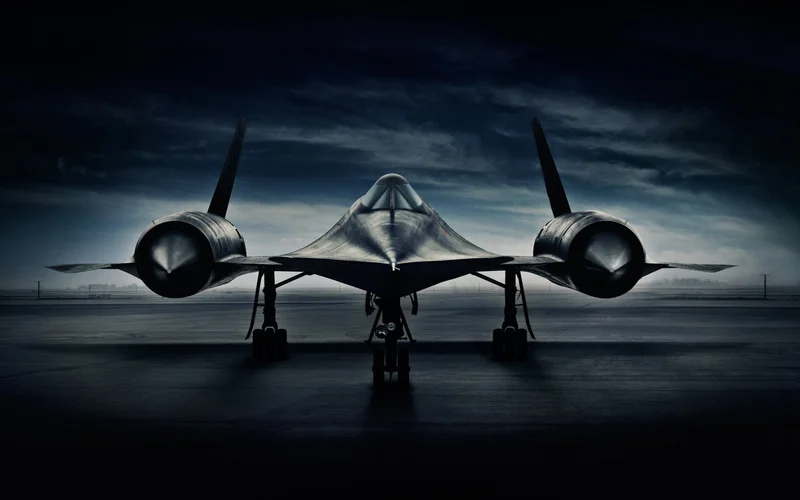
They call it a "global supply chain" with "international partners." That sounds collaborative and modern, doesn't it? What it really is is a way to weave the company's tentacles so deeply into the economies of the U.S. and its allies that it becomes politically and economically impossible to cut them off. If you're a politician in a district with a plant that makes one specific bolt for the F-35's landing gear, are you ever going to vote to reduce the F-35 budget? Offcourse not. Your constituents would lose their Lockheed Martin jobs, and you'd lose your next election.
This is the genius of the Lockheed Martin corporation. It's not just about building the most advanced fighter jet; it's about building a political and economic fortress around that jet. A fortress with a $166.5 billion backlog. That number is thrown around as a sign of a healthy company, but what it really represents is a pre-ordained claim on future public funds. It's a promise that for the next decade, no matter what happens in the world, the money will keep flowing.
It makes you wonder, doesn't it? Is the goal here to actually create a stable world where we don't need 1,200-plus stealth fighters? Or is the goal to maintain a state of affairs where a $166.5 billion backlog seems not just normal, but necessary? This whole thing ain't about winning a war. It’s about perpetuating the machine.
Then again, maybe I'm the crazy one. Everyone else seems to be fine with it. The stock analysts are cheering, the politicians are posing for photos, and the company keeps cashing the checks. It’s a perfect, closed loop. The government identifies a threat (or the potential for a future threat), the company proposes an incredibly complex and expensive solution, the government funds it with taxpayer money, and the company then hires lobbyists and spreads its manufacturing base around to ensure the funding never, ever stops. It’s a self-licking ice cream cone, and honestly...
This new contract isn't news. It's a renewal notice. It's a glimpse into a future where defense policy is indistinguishable from industrial policy. The future of war isn't going to be decided by generals on a battlefield. It's being decided right now, in contracts like this one, locking us into a specific, incredibly expensive version of tomorrow. A tomorrow where "peace" is just a byproduct of overwhelming, permanently-funded "strength."
Let's be real. This F-35 deal isn't a strategic masterstroke or a triumph of engineering. It's the renewal of a long-term lease. We're leasing a version of global security that requires perpetual payments to a handful of corporations. The "future of war" is a future of guaranteed revenue streams, quarterly earnings calls, and a defense budget that looks more like a subscription fee. And we're the ones paying for it. Forever.
Tags: lockheed martin
Related Articles
Let's be real for a second. Every time a major tech company drops a new "Et...
2025-11-10 19 lockheed martin