
The Science of CBD: What It Really Is, How It Works, and Why It’s Not THC
The Signal and the Noise: A System at War With Itself
It was one of those weeks where the future felt like it was arriving in fast-forward and reverse at the exact same time—a former President drops a video endorsing Medicare coverage for CBD that sends markets into a frenzy while, almost simultaneously, state agents are walking into small-town Kansas shops and seizing those very same products off the shelves. It’s a perfect, stunning microcosm of a system at war with itself. A battle between a top-down signal of inevitable change and the last, desperate gasps of a bottom-up legacy system.
When I saw news that Some Kansas CBD shops temporarily close due to FBI raids juxtaposed with the cannabis stock surge that same day, I honestly just leaned back in my chair and smiled. This wasn't a sign of failure; it was the unmistakable sound of an old paradigm cracking under pressure. On one hand, you have Donald Trump’s video, which, regardless of your politics, acted as a massive cultural and financial accelerant. The market responded instantly because it recognized the signal: a powerful indicator that these compounds are moving out of the fringe and into the absolute mainstream of American life.
On the other hand, you have the Kansas Bureau of Investigation (KBI) executing raids. Look at the scene: agents entering stores, confiscating bottles of CBD oil and packages of THC gummies, telling owners their products are illegal. Why? Because of a breathtakingly convoluted legal framework. The entire conflict hinges on a legal limit of 0.3% THC—in simpler terms, that’s the tiny, non-psychoactive trace amount that legally separates "hemp" from "marijuana"—but the state’s rules for how to measure that in a multi-gram product are a complete mess. One law says it’s fine, another implies any consumable is illegal. It’s a bug in the code of governance.
This isn't a story about Kansas. It's a story about the friction that occurs when an information-based revolution slams into an infrastructure built for a different century. The KBI isn't evil; it's an algorithm executing outdated code. Director Tony Mattivi says the labels on some products clearly show they contain 5 or 10 milligrams of THC, which is "well above the point 0.3%." He's not wrong based on one interpretation. But is that interpretation still relevant when the world is moving in a completely different direction? Is the system serving the people, or just the system itself?
The Inevitable Upgrade to Personalized Wellness
Let’s zoom out, because the ground-level chaos is obscuring the truly beautiful thing that’s happening here. We are witnessing the very first steps of a massive paradigm shift in human health, moving from one-size-fits-all pharmaceuticals to a future of precisely tailored bio-compounds. What we call CBD products today—the oils, the creams, the CBD drinks—are merely the clumsy, first-generation prototypes of this revolution. They are the dial-up modems of personalized wellness.
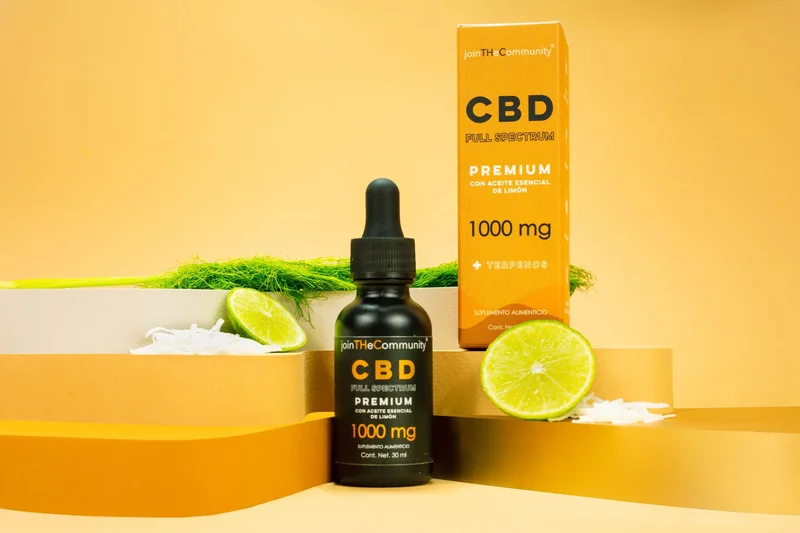
Think about the early days of the internet. It was a chaotic, unregulated wild west. There were scams, confusing technologies, and governments had no idea how to handle it. Pundits and politicians screamed about the dangers. And yet, the core promise—the instantaneous connection of human knowledge—was so powerful that it ploughed through every obstacle. The system adapted because it had to. That’s precisely what’s happening with cannabinoids like CBD, CBN, and CBG. The promise of providing targeted relief for pain, anxiety, and sleep issues without the heavy-handed approach of traditional drugs is too powerful to ignore.
This is why the perspective of someone like Jason Todack, the owner of CBD American Shaman in Kansas, is so incredibly important. He’s not some outlaw trying to skirt the rules. He went to the attorney general’s office seeking clarity. He said his industry is "regulated by being threatened with imprisonment or a felony." But listen to what he’s asking for: clear regulations and an age limit of 21. This is the sound of a maturing industry begging for a stable, modern operating system. It’s a sign of incredible hope. He isn’t fighting for chaos; he’s fighting for legitimacy.
When we see skepticism online, with people calling a political endorsement a "grift," we're missing the point. The motive behind the signal is irrelevant. The effect of the signal is what matters. It forces the conversation. It pushes the legacy systems to their breaking point, exposing their outdated logic and forcing an upgrade. The real question we should be asking ourselves is not if these compounds will be a part of our future, but how we can build a smart, safe, and innovative framework to unlock their full potential. What happens when we can map an individual’s specific biology to a precise combination of cannabinoids to achieve a desired outcome? What does a world look like where you and I have that level of control over our own well-being?
This is the kind of breakthrough that reminds me why I got into this field in the first place. We are on the cusp of something extraordinary. Yes, there’s a responsibility here. We need the clear, science-based regulations that people like Todack are calling for. We need to protect consumers and ensure quality. But we cannot let the fear and confusion of a dying paradigm halt the progress of a better one. The chaos in Kansas isn't the story. It's just the noise the old world makes as the new one is being born.
The Code Is Compiling
Don't mistake the friction for failure. The raids, the legal contradictions, the political posturing—it's all just debugging. It’s the messy, frustrating, but absolutely necessary process of a society upgrading its own source code. The demand for a more nuanced, personalized approach to health is an unstoppable algorithm. Legacy systems can throw up error messages and resistance, but they can't stop the program from running. The future is compiling, and what’s happening on the ground in Kansas is simply the system working through its final, frantic bugs before the new version goes live.
Tags: cbd
Crown Castle: That 32% Dividend Cut and Wall Street's Bizarre 'Buy' Rating
Next PostRivian Stock: The Data vs. the Narrative
Related Articles