
The International Space Station: A Data-Driven Guide to Its Location, Purpose, and Cost
This week, if you’re in Central Texas and the weather holds, you’ll have two chances to see the International Space Station. It will appear as a silent, brilliant point of light, arcing gracefully across the dusk sky. On Tuesday, it’ll be a brief three-minute pass. On Wednesday, you get a better show: a full six-minute transit that will take it directly overhead, a 90-degree peak against the deepening blue.
From the ground, it’s a serene spectacle. It looks clean, simple. But that single dot of reflected sunlight is the endpoint of a complex and staggeringly expensive equation. It’s a laboratory and a home, traveling at over 17,500 miles per hour, circling the planet every 90 minutes. For nearly 25 years—a quarter-century of continuous human presence in low-Earth orbit—that light has been a constant.
The official narrative, the one you’ll find on NASA’s websites, frames the station as an unparalleled success. And the top-line metrics are certainly impressive. Since the first modules were launched in 1998, the ISS has hosted more than 4,000 experiments. These have resulted in over 4,400 research publications, a respectable output for any institution. The research spans materials science, biotechnology, and human health, generating tangible results from the study of microgravity. We’ve seen improvements in crystallizing cancer-fighting drugs, the development of techniques for growing artificial retinas, and the first successful sequencing of DNA in orbit.
It’s a platform that has allowed us to solve the fundamental problems of living off-planet. How to drink water without gravity, how to prevent bone density loss, how to grow food. Over 50 species of plants have been cultivated, and NASA recently achieved 98% water recovery in the U.S. segment. These are not trivial accomplishments; they are the necessary precursors to any serious attempt at deep space exploration, whether to the Moon or Mars. The ISS is, by this accounting, the essential stepping stone.
From Monument to Liability: The Real Risk Profile of the ISS
An Assessment of Operational Risk
But an asset is more than its historical return. You have to look at its current operational integrity and its terminal value. And this is where the serene image of the dot in the sky begins to break down. The ISS is an aging piece of infrastructure, a coalition asset with deeply intertwined dependencies that introduce significant, and often unstated, risk.
Consider the recent orbital reboost. In late September, NASA used a SpaceX Dragon freighter to raise the station’s altitude, a crucial maneuver for maintaining orbit and coordinating crew swaps. The official release noted it was a success. What it downplayed was that the initial attempt was manually aborted less than four minutes into its planned 19-minute burn because the Draco thruster fuel tanks failed to swap as planned. The second attempt worked. But the incident is a data point, a flicker of fragility in a system that requires near-perfect execution.
This fragility is systemic. Despite the new US capability to reboost the station, the American and Russian segments remain, in the agency's own words, "inextricably linked." The station’s primary flight computers, supplied by the European Space Agency, are located in the Russian Zvezda module. Attitude control, the literal ability to keep the station stable and pointed in the right direction, is run from the Russian side. I’ve reviewed hundreds of system architecture diagrams in my career, and the concentration of core functionality in a single, non-redundant segment owned by a partner with divergent geopolitical interests is a liability that is difficult to overstate.
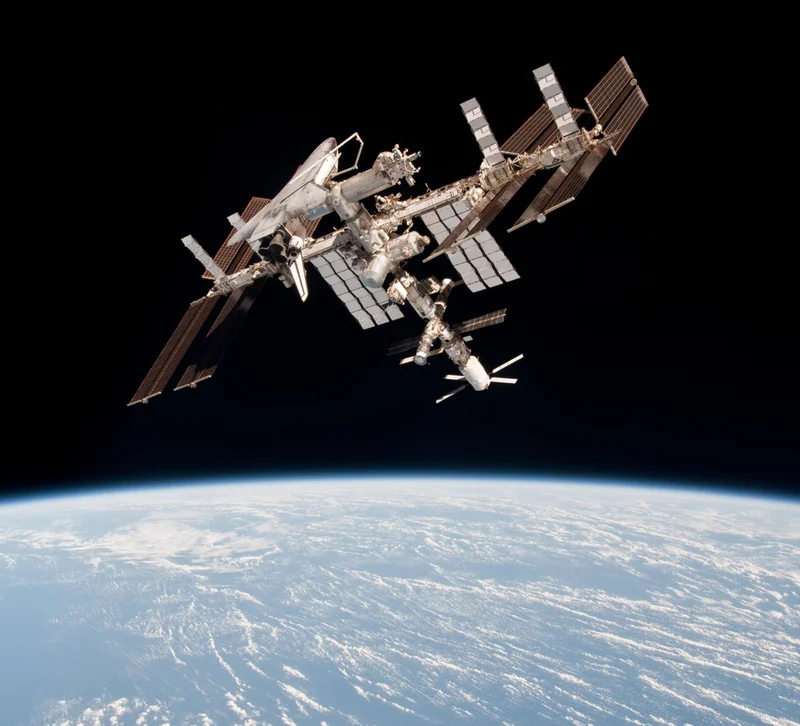
While observers suggest hatches to the Russian segment could be closed in the event of worsening problems, like the module’s persistent air leaks, this doesn’t solve the central command-and-control problem. Replacing that functionality would be a monumental undertaking. It’s debatable whether such an effort would be worth the cost for an outpost that already has a fixed expiration date.
The station’s lifespan isn’t indefinite. The plan is to deorbit the ISS in 2030 (a controlled crash into a remote area of the Pacific Ocean). That date is approaching fast. The serene dot of light has a deadline.
This brings us to the next phase. NASA is not building a successor. Instead, it is pivoting its strategy from owner-operator to commercial customer. The agency has invested over $400 million—to be more exact, an initial $415.6 million in awards—to stimulate the development of privately owned, commercially operated space stations. The goal is to have these new platforms operational before the ISS is decommissioned, allowing NASA to simply purchase missions and research time from companies like Blue Origin or SpaceX.
This is a profound strategic shift. It mirrors the model used for cargo and crew transport, which has been largely successful. But building, launching, and operating an entire space station is an order of magnitude more complex than running a taxi service. The timeline is tight, and as the official NASA announcement states, "Which of these teams will be successful, and on what timescale, remains to be seen."
While the U.S. bets on a nascent commercial market to maintain its presence in low-Earth orbit, China is not waiting. Its Tiangong space station is already operational, permanently crewed by three taikonauts at the same 250-mile altitude as the ISS. It has been continuously occupied for about four years. When the ISS is retired, the streak of "continuous human presence" in orbit will not end. It will simply migrate to a different flag.
So when you step outside this week and look up at 7:55 PM on Wednesday, you are seeing more than a scientific outpost. You are seeing the last of its kind: a monument to a model of international cooperation that, for all its flaws, worked for a generation. It is a depreciating asset, a masterpiece of engineering nearing the end of its useful life, about to be replaced by a riskier, unproven commercial venture. That silent, brilliant light is the closing of a ledger.
The Decommissioning Inevitability
The International Space Station was a triumph of science and diplomacy. Its true legacy, however, won't be found in the 4,400 papers it produced. Its legacy will be the vacuum it leaves behind. The data clearly shows NASA is trading the certainty of a globally-backed, government-owned asset for the volatility of a commercial market it hopes will materialize in time. It's a calculated gamble, but a gamble nonetheless. The numbers on the future of American presence in low-Earth orbit are no longer a forecast; they are a probability distribution.
Reference article source:
Tags: international space station
LLY Stock's Insane Rally: What's Driving the Price and the Next-Nvidia Hype
Next PostThe Fermi Stock IPO: Why Reddit is Obsessed and If It's All Hype
Related Articles