
The Nicki-Cardi Data War: How Their Rivalry Became the Music Industry's Most Powerful Algorithm
I’ve spent most of my career analyzing complex, emergent systems. I’ve modeled everything from neural networks to quantum computing architectures, and I’ve always been fascinated by how simple inputs can trigger cascading, unpredictable, and beautiful outputs. But the most fascinating system I’ve seen in years isn’t running on a silicon chip in a lab. It’s running on our phones, in real-time, fueled by data, ego, and the raw, chaotic energy of human creativity.
I’m talking, of course, about the reinvigoration of the feud between Cardi B and Nicki Minaj.
Now, stay with me. I know what you’re thinking. A celebrity spat? But I’m asking you to look past the headlines and see the breathtaking machinery at work underneath. What we witnessed in late September wasn’t just a squabble; it was a live stress test of an entirely new cultural paradigm. It began, as so many modern events do, with a single data point. Cardi B’s new album, "Am I The Drama?", debuted at number one with a solid 200,000 units. A success by any measure. But in this new ecosystem, data is relative. The network immediately cross-referenced this with another data point: Nicki Minaj’s "Pink Friday 2" had debuted months earlier with 228,000 units.
And that’s when the system ignited.
What followed was a masterclass in high-velocity information warfare. Minaj, a veteran of this digital terrain, didn’t issue a press release. She amplified signals from her network, reposting fan messages that highlighted her superior numbers. She then deployed her own data packet: a cryptic, since-deleted post reading "4.99," a payload designed to suggest her rival’s success was artificially inflated by discounts.
This isn’t just a "Twitter beef"—in simpler terms, it's a live-fire exercise in memetic warfare, where the goal is to control the narrative by deploying the most potent, emotionally resonant information. Cardi B’s response was a counter-salvo of pure, uncut id: "You must’ve missed me, huh crazy?? Now kiss my feet." She labeled Minaj "Cocaine Barbie," a brilliant piece of code that simultaneously attacked her rival’s brand identity and injected a viral, scandalous idea into the public consciousness.
The escalation was immediate and exponential. Minaj fired back with diss raps, weaponizing personal information with lines like "SUR GER REE TO LOOK LIKE MEEEEEE" and a cruel jab at Cardi B’s recently announced pregnancy. The speed and ferocity of this exchange is just staggering—it’s a complete collapse of the traditional media cycle where artists, fans, and the platform itself merge into a single, churning, content-generating organism that operates faster than any legacy institution could ever hope to track. Cardi’s final, devastating move—referencing the criminal conviction of Minaj’s brother—was a scorched-earth protocol, an attack so brutal it threatened to destabilize the entire system.
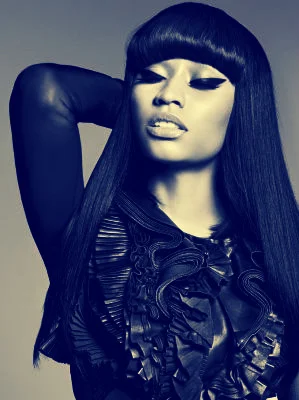
When I saw that post, with the edited mugshot, I honestly just sat back in my chair, speechless. Not just at the viciousness, but at the sheer audacity of the move in this open-source conflict. This is the kind of breakthrough in communication, for better or worse, that reminds me why I find these new systems so utterly compelling.
The Crowd as a Sentient Network
The Network Becomes Self-Aware
To truly understand what’s happening here, you have to stop thinking of the "fans" as a passive audience. They are not. They are the active, processing nodes of this vast, decentralized network. They are the data analysts, the archivists, and the amplifiers. When they posted that Nicki Minaj holds the record for the "biggest first-week for a female rap album this decade," they weren't just cheering; they were validating the network’s core beliefs with verifiable data. They are the gatekeepers of history in this new world.
Think of the public letters exchanged between Newton and Leibniz as they battled over the invention of calculus. That was the 17th-century version of this—a high-stakes intellectual feud that played out in the open. But it was slow, gated by publishers and couriers. What we’re seeing now is the same human impulse accelerated to the speed of light, with millions of participants adding to the discourse simultaneously. The feud’s origins in 2017 over the song "Motorsport," or the infamous shoe-throwing incident of 2018, were merely early beta tests. Now, the system is fully deployed.
And it’s growing more complex. The emergence of a third major artist, Ice Spice, into this dynamic is a perfect example of the system’s emergent complexity. A leaked song, a leaked phone call where Cardi B threatens her—these aren't side stories. They are new variables that create unpredictable new feedback loops. Suddenly, the narrative isn’t a simple binary conflict anymore. It’s a multi-body problem, a chaotic dance of shifting alliances and public perception. What does it mean for the future of entertainment when the narrative is no longer written by a studio, but is instead generated, in real time, by the unpredictable interactions between the system's most powerful nodes?
Cardi B’s own words point to the scale here. She told Minaj to compare her sales not to her, but to global platforms like Taylor Swift and Rihanna. She understands, intuitively, that this isn't just about rap. This is about market share in the new attention economy.
Of course, we have to pause for a moment of ethical consideration. As we marvel at the efficiency and power of this system, we must remember that the data points are human beings. The attacks are real, the pain is real, and the protocols of this new ecosystem have not yet evolved to include a robust framework for empathy or decency. That is the work ahead for all of us, the architects and users of this new digital society. But to dismiss this entire phenomenon as mere "drama" is to miss the profound shift it represents. We are leaving the era of top-down, curated culture and entering an age of bottom-up, chaotic, and participatory creation. It’s messy. It’s sometimes ugly.
But it is undeniably alive.
The Algorithm is Human
What we are witnessing is the birth of the living narrative. It’s a story that writes itself, with the artists as protagonists and millions of us as co-authors, editors, and distributors. For generations, culture was a monologue delivered from a stage. Now, it’s a global, real-time conversation. This isn't a bug; it's the feature. And it’s the most exciting, terrifying, and profoundly human system we’ve ever built. The future isn’t being coded in a lab; it’s being screamed into a microphone and posted online for all the world to see. And it is magnificent.
Reference article source:
Tags: nicki minaj
SWIFT's Big Bet on Linea: What This Crypto Actually Is and Why Anyone Should Care
Next PostOpenEden: The Mechanics of Tokenized T-Bills and What the Data Shows
Related Articles