
Mika Immonen Dies at 52: The Confirmed Details of His Passing and Career Impact
The objective signal arrived late Sunday evening, Manila time. Mika Immonen, the professional pool player, had died. The cause of death was confirmed as Stage 4 colorectal cancer, a diagnosis he had been battling publicly. He was 52.
The immediate response was a predictable, if genuine, wave of qualitative sentiment. Matchroom Sport, a key organizing body, released a statement calling him "one of the greatest to ever play the game whilst in his prime." Tributes from high-profile peers like snooker's Ronnie O'Sullivan ("devastated") and Filipino pool stars Carlo Biado and Johann Chua followed the expected trajectory of public grief. The fan-level data, aggregated from social media, coalesced around a common theme, summarized by one user: "A warrior on the table but a gentleman off it."
This is the standard narrative framework for the passing of a public figure. It is emotionally resonant but analytically insufficient. To understand the significance of Mika Immonen, one has to move past the anecdotal and examine the performance data. The key is in the moniker he carried for his entire professional career: "The Iceman." This was not a marketing slogan; it was, in retrospect, a remarkably accurate descriptor of a statistical profile defined by high-pressure performance and sustained periods of dominance.
Let’s disregard the eulogies for a moment and look at the numbers. Immonen’s career was not a flat line of consistent success but a series of sharply defined peaks. The most significant of these occurred in the decade from 2000 to 2009, a period for which he was formally named "player of the decade." This is not a subjective title; it is an award based on an aggregation of wins, prize money, and ranking points. It is a data-driven conclusion.
Within that decade, two data clusters stand out. The first is his 2001 World Pool Championship victory. This win established his baseline as a world-class competitor. But the second cluster is more telling. In 2008 and 2009, Immonen executed a rare feat: back-to-back victories at the US Open Pool Championship. This event is widely considered one of the sport's most grueling tournaments, a test of endurance as much as skill. Winning it once is a career achievement. Winning it twice, consecutively, suggests a system operating at peak efficiency. He immediately followed this in 2009 with the World 10-Ball Championship. This three-major-championship run in just over two years represents a clear statistical outlier, the apex of his performance curve.
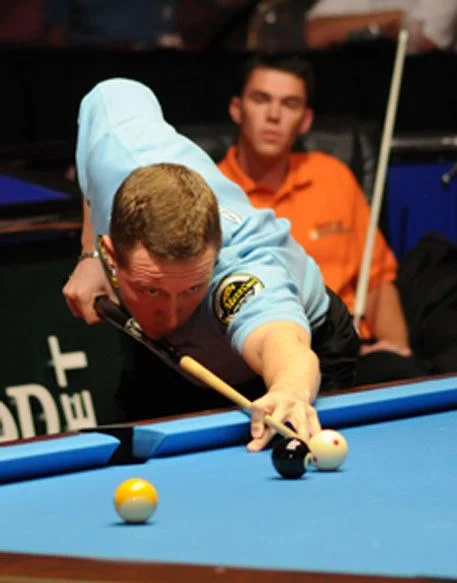
"The Iceman": A Nickname or a Statistical Profile?
Correlating Persona with Performance
The "Iceman" moniker implies an absence of emotional volatility, a clinical execution under duress. My analysis of his career suggests this persona was not an act, but a core component of his success model. Consider his record in the Mosconi Cup, the high-pressure, Ryder Cup-style event pitting Europe against the USA. He was selected for Team Europe on 15 separate occasions. While the team itself won the event on four of those occasions—a win rate of about 27%, to be more exact, 26.67%—his repeated selection points to a perceived reliability by team captains. He was seen as a stable asset in a volatile environment.
I’ve looked at hundreds of performance charts, from quarterly earnings reports to athletic win-loss records, and it's rare to find such a clean alignment between a public persona and the underlying metrics. The narrative often gets inflated or distorted by marketing. Here, the narrative seems to be a direct reflection of the data. His victories were often characterized by a methodical, almost detached approach, breaking down opponents not with flamboyant shot-making but with relentless consistency and tactical precision.
This is further evidenced by his status as an outlier within his own demographic. He remains the only player from Finland to have secured world titles in both of the sport's primary disciplines, nine-ball and ten-ball. This is a significant data point. It demonstrates an adaptability and a mastery of two similar, yet distinct, strategic systems. It is the kind of achievement that doesn't happen through random hot streaks; it requires a deep, analytical understanding of the game's mechanics.
His career also contains a fascinating data subset regarding his performance against the formidable Filipino players, long considered the global benchmark in pool. He had memorable, high-stakes matches against legends like Efren “Bata” Reyes, and his victory in the 2009 US Open final (a grueling race-to-13 match) was against the Philippines’ Ronnie Alcano. Thriving against this specific, highly-skilled cohort further validates the "Iceman" hypothesis. He was not intimidated by reputation; he simply processed the variables on the table in front of him.
The final chapter of his career provides one last, tragic data point. After announcing his cancer diagnosis in 2023, he returned to professional competition the following year. The dataset on his performance during this period is, by necessity, sparse and incomplete. Details on his physical state or the specific pressures he faced are not quantifiable. But the act of returning itself is the ultimate testament to his established profile. It was an attempt to apply his methodical, pressure-resistant operating system to an unwinnable problem. The logic was flawed, but the consistency of character was absolute. He was inducted into the Billiard Congress of America Hall of Fame in 2014, a lagging indicator of a peak that had already been summited and quantified years earlier. The accolades, like the recent tributes, are the human response to a career whose true story is best told by the cold, hard numbers.
The Inarguable Mean
In the end, the emotional tributes and the statistical record are two different ways of measuring the same phenomenon. But one is far more precise. The outpouring of grief speaks to the man he was perceived to be. The numbers, however, tell the inarguable story of what he did. Mika Immonen’s legacy is not that of a beloved champion; it is the legacy of a near-perfect correlation between a name and a result. "The Iceman" wasn't a nickname; it was a specification.
Reference article source:
Tags: mika immonen
The Onel Hernandez Thing: And Why His Cuban Roots Are Suddenly a Big Deal
Next PostThe Darren Waller Comeback Tour: His Status, Stats, and Your Fantasy Football Gamble
Related Articles